



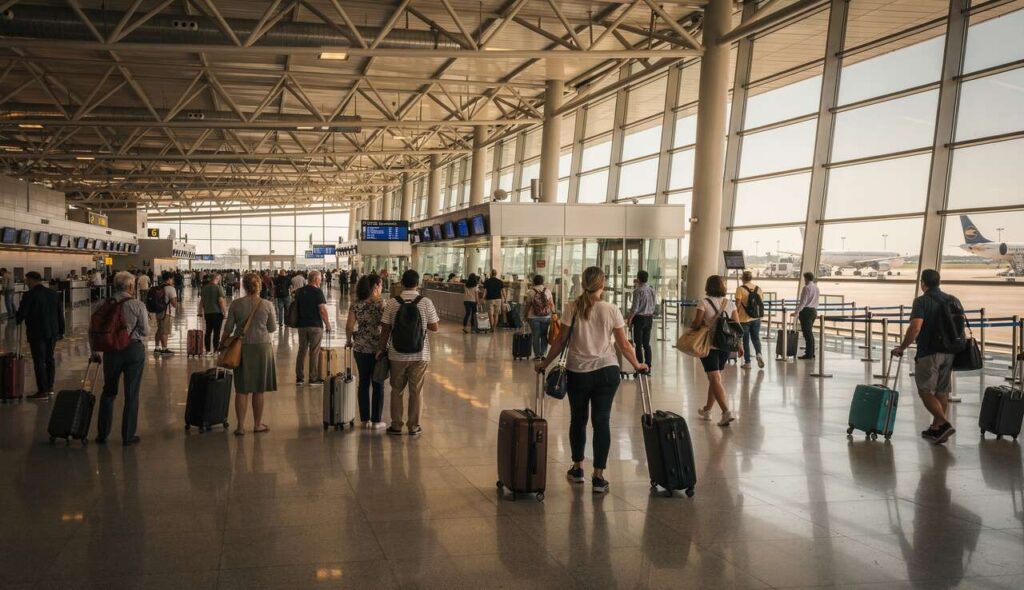
Flying can be a stressful experience, particularly when navigating busy airports, lengthy queues, and complex security procedures. However, with a few strategic approaches and insider knowledge, air travel becomes considerably more manageable. These practical airport hacks have been tested by frequent flyers and travel professionals alike, designed to streamline your journey from check-in to boarding gate. Whether you’re a seasoned traveller or preparing for your first flight, implementing these strategies will save you time, reduce anxiety, and make your airport experience remarkably smoother.
Tips for Efficiently Packing Your Carry-On
Mastering the art of carry-on packing transforms your entire travel experience, eliminating baggage claim waits and reducing the risk of lost luggage.
Strategic layering and rolling techniques
The rolling method remains one of the most effective packing strategies, creating more space whilst minimising wrinkles. Rather than folding garments flat, roll each item tightly from bottom to top, securing the roll with rubber bands if necessary. This technique allows you to visualise your entire wardrobe at a glance and maximises every centimetre of available space.
For business travellers carrying formal attire, the bundle wrapping method proves invaluable. Place your most wrinkle-prone items around a central core of softer clothing, creating a protective cushion that prevents creasing during transit.
Utilising compression bags and packing cubes
Investment in quality packing cubes revolutionises organisation within your carry-on. These lightweight organisers separate clothing categories, toiletries, and electronics, allowing instant access to specific items without unpacking everything. Compression bags take this further by removing excess air, reducing volume by up to forty per cent.
- Designate one cube for undergarments and socks
- Reserve another for tops and lightweight layers
- Use a waterproof cube for toiletries and liquids
- Keep electronics and chargers in a separate compartment
Essential items to keep accessible
Position frequently needed items in external pockets or at the top of your bag. Your passport, boarding pass, headphones, medications, and a refillable water bottle should remain within easy reach throughout your journey. Consider wearing your bulkiest shoes and heaviest jacket during travel to conserve precious luggage space.
Understanding how to pack efficiently naturally leads to making smarter decisions about when you travel, particularly regarding flight selection and timing.
How to Choose the Least Crowded Flights
Selecting the right flight time dramatically impacts your airport experience, affecting everything from queue lengths to seat availability.
Optimal departure times for minimal crowds
The first flight of the morning typically offers the quietest airport experience, with fewer passengers and shorter security queues. Flights departing between 6:00 and 7:00 benefit from overnight aircraft positioning, resulting in better on-time performance. Conversely, late evening departures after 21:00 also experience reduced passenger volumes, though delayed flights from earlier in the day may create unpredictability.
| Time Period | Crowd Level | Delay Probability |
|---|---|---|
| 6:00-8:00 | Low | 15% |
| 12:00-14:00 | High | 35% |
| 17:00-19:00 | Very High | 42% |
| 21:00-23:00 | Moderate | 28% |
Midweek versus weekend travel patterns
Tuesday, Wednesday, and Saturday flights generally experience lower passenger volumes compared to Monday morning business rushes and Friday afternoon getaway crowds. Business travellers dominate weekday morning and evening slots, whilst leisure passengers concentrate on weekend departures. Selecting a Wednesday afternoon flight often provides the optimal balance between availability and reduced congestion.
Seasonal considerations and holiday periods
Avoiding peak travel periods requires advance planning. School holidays, major festivals, and long weekends create significant airport congestion. If travel during these periods is unavoidable, book the earliest possible departure and arrive at the airport with additional time allowance. Shoulder season travel, occurring just before or after peak periods, offers substantially better pricing and fewer crowds.
Once you’ve selected an ideal flight time, knowing how to navigate airport queues efficiently becomes the next crucial skill.
Smart Queue Management
Strategic queue selection and timing can reduce your waiting time by half, transforming a tedious process into a swift progression through airport checkpoints.
Identifying faster-moving lanes
Observation skills prove invaluable when selecting check-in or security queues. The left-hand queue often moves faster, as most people instinctively veer right. Additionally, queues filled with business travellers typically progress more rapidly than those with families carrying multiple bags and young children. Look for passengers with minimal luggage and no strollers as indicators of a faster-moving line.
Self-service kiosks and mobile check-in advantages
Completing check-in via mobile application or airport kiosk eliminates the need to queue at staffed counters entirely. Most airlines allow online check-in twenty-four hours before departure, enabling seat selection and boarding pass download directly to your smartphone. For those checking baggage, dedicated bag-drop counters process passengers significantly faster than traditional check-in desks.
- Download your airline’s mobile application before travel
- Enable push notifications for gate changes and boarding updates
- Add boarding passes to your digital wallet for offline access
- Screenshot confirmation details as backup
Premium queue access options
Various programmes offer expedited security access beyond traditional first-class tickets. Registered traveller schemes, available in many countries, provide fast-track security lanes for annual membership fees. Some credit cards include complimentary lounge access with priority security screening. Priority Pass memberships grant access to over 1,300 airport lounges worldwide, many featuring dedicated security channels.
Efficient queue navigation naturally connects to maximising the complimentary services airports provide whilst you wait.
Taking Advantage of Free Airport Services
Modern airports offer numerous complimentary amenities that enhance comfort and convenience, yet many travellers remain unaware of these valuable resources.
Complimentary Wi-Fi and charging stations
Nearly all major airports provide free wireless internet, though connection procedures vary. Some require email registration, whilst others offer instant access. Charging stations have proliferated throughout terminals, featuring both standard outlets and USB ports. Many airports now install wireless charging pads at seating areas, compatible with recent smartphone models. When selecting a seat, position yourself near power sources to maintain device functionality throughout your wait.
Water refill stations and refreshment areas
Bringing an empty reusable bottle through security and filling it at post-security water fountains saves considerable expense. Many airports have installed enhanced hydration stations with bottle-filling spouts and consumption counters. Some terminals feature complimentary tea and coffee stations, particularly in Nordic and Asian airports where hospitality standards emphasise passenger comfort.
Rest zones and wellness facilities
Progressive airports recognise passenger wellbeing by providing dedicated quiet zones, prayer rooms, and even sleeping pods. Singapore Changi Airport offers free movie theatres and rooftop gardens. Munich Airport features a Christmas market and outdoor beer garden. Research your specific airport’s amenities beforehand to plan your pre-flight time effectively.
| Airport | Notable Free Service |
|---|---|
| Singapore Changi | Free cinema and butterfly garden |
| Seoul Incheon | Free showers and nap rooms |
| Munich | Outdoor beer garden access |
| Vancouver | Aquarium and art exhibitions |
Maximising these complimentary services enhances your airport experience, whilst proper security preparation ensures you reach these amenities swiftly.
Optimising Your Security Experience
Security screening represents the most stressful checkpoint for many travellers, yet preparation and knowledge dramatically reduce both time and anxiety.
Dress strategically for screening
Footwear selection significantly impacts security processing speed. Slip-on shoes eliminate fumbling with laces whilst standing in queue. Avoid excessive jewellery, belts with large buckles, and clothing with metal embellishments that trigger detectors. Wear jackets and coats rather than packing them, as you’ll need to remove them anyway, and this conserves luggage space.
Liquids compliance and toiletries organisation
The 100-millilitre liquid restriction remains strictly enforced across most international airports. Store all liquids, gels, and aerosols in a clear, resealable plastic bag with maximum one-litre capacity. Each container must not exceed 100 millilitres, regardless of actual content volume. Place this bag at the top of your carry-on for quick retrieval during screening.
- Purchase solid alternatives: bar shampoo, solid perfume, powder deodorant
- Decant products into travel-sized containers
- Consider purchasing toiletries after security
- Keep prescription medications in original packaging with labels visible
Understanding body scanner procedures
Modern millimetre wave scanners have replaced metal detectors at many airports. These devices detect both metallic and non-metallic objects, requiring passengers to empty all pockets completely. Remove items such as tissues, receipts, and coins before entering the scanner. Position your feet on marked footprints and raise your arms as instructed. The scan takes approximately three seconds, after which you’ll be directed to collect your belongings.
Proper security preparation extends beyond personal items to ensuring your electronic devices are ready for inspection.
Preparing Your Electronic Devices for Control
Electronic devices receive particular scrutiny during security screening, and proper preparation expedites this process considerably.
Battery and charging requirements
Security officers may request you power on electronic devices to verify functionality. Ensure laptops, tablets, and smartphones maintain sufficient charge before reaching security. Devices that cannot be powered on may be confiscated or require additional screening. Portable battery packs must remain in carry-on luggage due to lithium battery fire risks, and individual batteries should not exceed 100 watt-hours without airline approval.
Laptop and tablet removal protocols
Most airports require laptops and tablets larger than standard smartphones to be removed from bags and placed in separate bins for X-ray screening. Some progressive airports with computed tomography scanners allow electronics to remain in bags, though this technology isn’t universally deployed. Organise your bag so laptops sit in easily accessible compartments, preferably in dedicated padded sleeves that slide out smoothly.
Data security and privacy considerations
Before travel, back up important data and enable encryption on all devices. Border control officers in some countries possess authority to examine device contents. Consider travelling with minimal data, using cloud storage for sensitive information accessible after clearing customs. Disable biometric unlocking temporarily if you prefer not to provide fingerprint or facial access to authorities. Apply privacy screens to prevent shoulder surfing whilst working in public airport areas.
- Enable device tracking features before departure
- Use strong passwords rather than simple PINs
- Log out of banking and sensitive applications
- Carry charging cables in accessible pockets
Air travel need not be an ordeal when armed with practical knowledge and strategic preparation. Efficient packing maximises carry-on space whilst maintaining organisation throughout your journey. Selecting optimal flight times and employing smart queue management reduces waiting periods significantly. Awareness of complimentary airport services enhances comfort without additional expense, whilst proper security preparation eliminates unnecessary delays and stress. Electronic device readiness ensures smooth passage through checkpoints. Implementing these ten airport hacks transforms flying from a dreaded necessity into a manageable, even pleasant experience. The key lies in advance planning, staying informed about specific airport facilities, and maintaining flexibility when unexpected situations arise. With these strategies in your travel toolkit, you’ll navigate airports with the confidence and efficiency of a seasoned frequent flyer.