



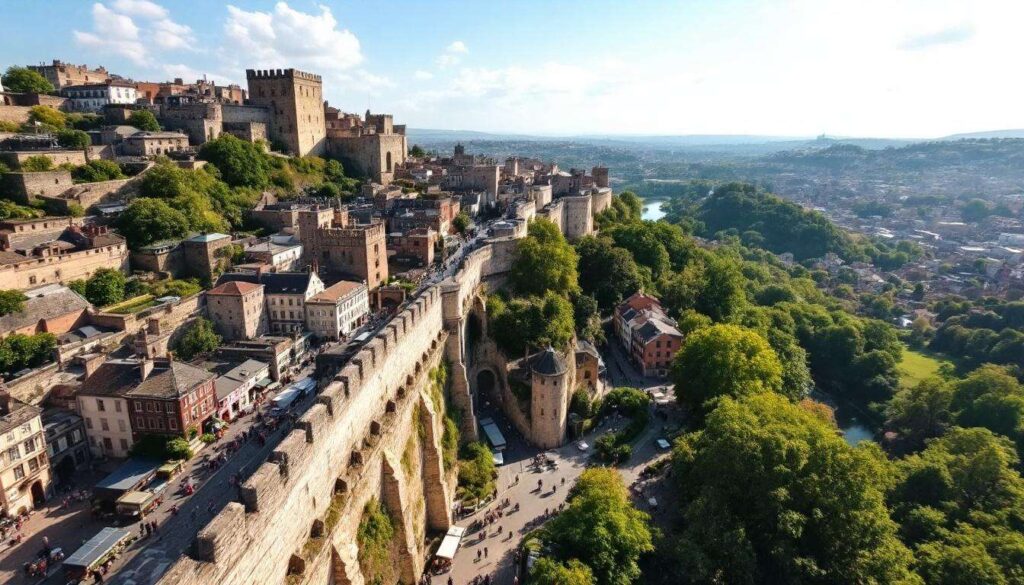
Scattered across continents, walled cities stand as remarkable monuments to centuries of architectural ambition and defensive strategy. These fortified settlements, encircled by imposing ramparts and sturdy gates, have protected communities from invaders whilst preserving unique cultural identities. Today, they offer travellers an extraordinary opportunity to step back in time, wandering through cobbled streets and discovering stories etched into ancient stone. From the sun-baked deserts of India to the medieval heart of France, these ten destinations represent some of the most breathtaking fortified cities that continue to captivate visitors with their enduring beauty and historical significance.
The medieval jewels: Lo Manthang and Jaisalmer
Lo Manthang: the hidden kingdom of Nepal
Nestled in the remote Upper Mustang region of Nepal, Lo Manthang remains one of the world’s most isolated walled cities. Founded in the 14th century, this former capital of the Kingdom of Lo sits at an altitude of approximately 3,800 metres, surrounded by earthen walls that have withstood harsh Himalayan conditions for over six centuries. The city’s distinctive ochre-coloured ramparts enclose a labyrinth of whitewashed buildings, ancient monasteries, and the former royal palace.
Access to Lo Manthang requires special permits, making it a destination for intrepid travellers seeking authentic cultural experiences. The city’s isolation has preserved Tibetan Buddhist traditions that have largely disappeared elsewhere, offering visitors a glimpse into a way of life that has remained virtually unchanged for generations.
Jaisalmer: the golden fortress of Rajasthan
Rising from the Thar Desert like a mirage, Jaisalmer Fort stands as one of the world’s few remaining living forts, where approximately 3,000 residents continue to inhabit the fortified complex. Constructed in 1156 from golden-yellow sandstone, the fort’s walls shimmer magnificently in the desert sunlight, earning it the nickname “Sonar Quila” or Golden Fort.
Within its fortifications, visitors discover:
- Ornate Jain temples featuring intricate carvings
- Traditional havelis with elaborate facades
- Bustling markets selling local handicrafts
- Residential quarters maintaining centuries-old architectural styles
The fort’s strategic location along ancient trading routes contributed to Jaisalmer’s prosperity, and today its remarkable preservation allows travellers to experience medieval Indian life within functioning city walls. These two Asian treasures represent just the beginning of a global journey through fortified history, leading us westward to Europe’s most spectacular walled city.
Carcassonne: French splendour
A double-walled masterpiece
Perched above the Aude River in southern France, Carcassonne represents the pinnacle of medieval military architecture. The city’s extraordinary fortifications comprise two concentric walls punctuated by 52 towers, creating an impregnable defensive system that spans nearly three kilometres. The inner ramparts date from the Gallo-Roman period, whilst the outer walls were constructed during the 13th century under the reign of Saint Louis.
The 19th-century restoration efforts transformed Carcassonne into the remarkably preserved medieval citadel visible today. Despite some controversy surrounding the restoration’s historical accuracy, the city’s fairytale appearance has captivated millions of visitors.
Exploring the Cité
| Feature | Details |
|---|---|
| Total towers | 52 defensive towers |
| Wall length | Approximately 3 kilometres |
| Main entrance | Porte Narbonnaise with twin towers |
| UNESCO status | World Heritage Site since 1997 |
Within the walls, narrow streets wind past medieval houses, artisan workshops, and the magnificent Basilica of Saint-Nazaire. The Château Comtal offers guided tours revealing defensive strategies and daily life during the Middle Ages. From Carcassonne’s French elegance, our journey continues to two distinctly different yet equally captivating fortified cities.
Tallinn and Ait Benhaddou: treasures of Eastern Europe and Morocco
Tallinn: a Hanseatic gem
Estonia’s capital boasts one of Europe’s best-preserved medieval old towns, encircled by defensive walls dating from the 13th century. As a prosperous member of the Hanseatic League, Tallinn invested heavily in fortifications featuring 46 towers, of which 26 survive today. The limestone walls and distinctive red-roofed towers create a picturesque skyline that transports visitors to medieval times.
Key highlights include:
- The imposing Fat Margaret tower guarding the harbour entrance
- Kiek in de Kök, a 15th-century artillery tower
- The atmospheric Viru Gate with its twin towers
- Cobblestone streets lined with merchant houses
Ait Benhaddou: Morocco’s earthen fortress
In stark contrast to Tallinn’s stone construction, Ait Benhaddou showcases the traditional Moroccan earthen architecture known as pisé. This fortified village, or ksar, sits along the former caravan route between the Sahara and Marrakech. Its clustered kasbahs and defensive walls, constructed from rammed earth, clay, and straw, demonstrate remarkable building techniques adapted to the harsh desert climate.
The site’s dramatic appearance has made it a favourite filming location, featuring in numerous productions whilst maintaining its authentic character. The journey from these contrasting fortifications leads us across the Atlantic to the New World’s walled treasures.
The authenticity of Quebec and the colour of Cartagena
Quebec City: North America’s fortified jewel
Quebec City holds the distinction of being the only fortified city north of Mexico with walls still intact. The fortifications, primarily constructed by French and British military engineers between the 17th and 19th centuries, encircle the historic Upper Town. The star-shaped Citadel, completed in 1850, represents one of the finest examples of British military architecture in North America.
Cartagena: Caribbean colonial splendour
Colombia’s Caribbean coast harbours Cartagena, where Spanish colonial walls embrace a vibrant old town bursting with colour and life. Construction began in 1586 following pirate attacks, eventually creating 11 kilometres of fortifications including imposing forts and bastions. The ochre and coral walls contrast beautifully with bougainvillea-draped balconies and pastel-coloured colonial buildings.
Cartagena’s fortifications showcase:
- The formidable Castillo San Felipe de Barajas
- Multiple defensive bastions overlooking the Caribbean
- Underground tunnels connecting strategic points
- Perfectly preserved colonial architecture within the walls
These American fortresses demonstrate how European military traditions adapted to new continents, whilst our next destinations return us to cities where ancient and medieval history intertwine.
The timeless charm of Jerusalem and Mdina
Jerusalem: walls of faith and history
Few walled cities carry the profound spiritual significance of Jerusalem, where current Ottoman-era fortifications built in the 16th century enclose sites sacred to three major religions. The walls stretch approximately 4 kilometres, punctuated by eight gates, each with its own historical narrative. Walking atop these ramparts offers spectacular views of the Old City’s quarters and countless holy sites.
Mdina: Malta’s silent city
Perched atop a hill in central Malta, Mdina’s honey-coloured limestone walls have protected this ancient capital for over 4,000 years. The current fortifications, strengthened by the Knights of Malta, create an atmospheric medieval townscape where narrow streets and baroque palaces remain remarkably preserved. Known as the Silent City due to restricted vehicle access, Mdina offers a tranquil contrast to Malta’s busier coastal areas.
From these Mediterranean and Middle Eastern bastions, we journey to two Western European cities where Roman and medieval heritage merge seamlessly.
Chester and Avila: living history in the west
Chester: Roman foundations, medieval walls
Chester’s walls represent the most complete circuit of Roman and medieval defences in Britain, stretching approximately 3 kilometres around the city centre. Originally established by Romans as the fortress of Deva, the walls were rebuilt and extended throughout the medieval period. Today, visitors can walk the entire circuit, passing distinctive features including the Eastgate Clock, ancient watchtowers, and sections revealing Roman stonework beneath medieval additions.
Avila: Spain’s medieval masterpiece
Avila boasts the best-preserved medieval walls in Spain, completed in the 11th century with 88 semicircular towers and nine gates encircling the entire historic centre. The granite ramparts stretch 2.5 kilometres, reaching heights of 12 metres in places. This extraordinary fortification earned Avila recognition as a UNESCO World Heritage Site, representing one of Europe’s finest examples of Romanesque military architecture.
| Feature | Measurement |
|---|---|
| Wall length | 2.5 kilometres |
| Number of towers | 88 towers |
| Number of gates | 9 fortified gates |
| Maximum height | 12 metres |
These ten remarkable walled cities demonstrate humanity’s enduring desire to protect communities whilst creating architectural legacies that transcend their original military purposes. Each destination offers travellers unique insights into different cultures, historical periods, and defensive strategies. Whether wandering Carcassonne’s medieval streets, exploring Jaisalmer’s living fort, or walking Chester’s Roman foundations, visitors encounter tangible connections to the past. These fortified cities continue to inspire wonder, serving as powerful reminders that walls built for defence have become bridges connecting modern travellers to centuries of human history and achievement.