



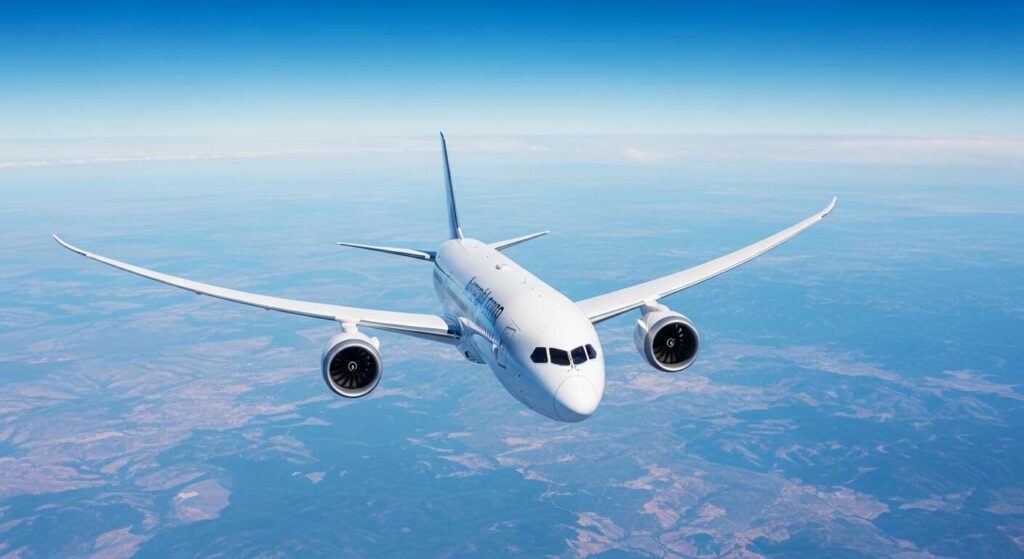
Australia’s aviation sector has witnessed remarkable transformations with the deployment of Boeing 787 aircraft on increasingly ambitious routes. These cutting-edge aircraft have redefined what is possible in terms of non-stop connectivity, linking the continent to distant corners of the globe. The Boeing 787’s advanced technology enables airlines to operate flights that would have been economically unviable just a generation ago, opening new possibilities for travellers seeking direct connections without the inconvenience of layovers.
Exploring the longest routes
Perth to London Heathrow: the record holder
The crown jewel of Australia’s ultra-long-haul operations is undoubtedly the Perth to London Heathrow route, which takes passengers on a journey lasting 17 hours and 50 minutes. This service, launched in March 2018, utilises the Boeing 787-9 model and has become an integral component of international connectivity. The route covers approximately 14,500 kilometres, making it one of the world’s longest commercial flights by distance.
This groundbreaking service has revolutionised travel between Australia and Europe by eliminating the need for connections in Middle Eastern or Asian hubs. Passengers can now board in Perth and disembark directly in the British capital, saving valuable time and reducing travel fatigue.
Transatlantic and transpacific connections
Beyond the Perth-London route, several other ultra-long-haul services demonstrate the capabilities of the Boeing 787 fleet:
- Dallas/Fort Worth to Melbourne, offering direct links between North America and Australia’s southern regions
- Tokyo to various Australian cities, strengthening ties with Asia’s economic powerhouse
- Hong Kong connections, providing vital business and leisure travel options
- Experimental routes such as New York JFK to Sydney, tested with flight times exceeding 19 hours
The New York to Sydney test flight particularly captured global attention, demonstrating that even more ambitious routes may become commercially viable in the near future. This experimental service, with its 19 hours and 30 minutes duration, pushed the boundaries of what passengers and crew could endure whilst maintaining safety and comfort standards.
These extensive route networks illustrate how modern aircraft technology has fundamentally altered the geography of air travel, bringing continents closer together than ever before.
The Boeing 787: a giant of the skies
Technical specifications and capabilities
The Boeing 787 family represents a significant leap forward in aircraft design and engineering. The aircraft’s composite construction reduces weight whilst maintaining structural integrity, allowing for greater fuel efficiency and extended range capabilities. This innovative approach to aircraft manufacturing has made ultra-long-haul flights economically feasible.
| Feature | Boeing 787-9 | Benefit |
|---|---|---|
| Range | 14,140 km | Enables non-stop long-haul routes |
| Fuel efficiency | 20% improvement | Reduced operating costs |
| Passenger capacity | 250-290 seats | Optimal for demand on ultra-long routes |
Operational advantages for airlines
Airlines operating the Boeing 787 benefit from reduced maintenance requirements and lower fuel consumption compared to previous-generation aircraft. The 787’s advanced engines and aerodynamic design contribute to operational efficiency, making routes that were once unprofitable now commercially viable. These economic advantages have encouraged carriers to expand their long-haul networks, connecting secondary cities directly to international destinations.
The aircraft’s reliability has proven essential for maintaining consistent service on routes where alternative options are limited, ensuring passengers can depend on these vital connections.
Qantas and its aviation innovations
Project Sunrise and beyond
Australia’s flag carrier has positioned itself at the forefront of ultra-long-haul aviation innovation. The airline’s commitment to pushing the boundaries of non-stop travel has resulted in several industry-first achievements. The Perth-London service exemplifies this pioneering spirit, demonstrating that with the right equipment and operational planning, previously impossible routes become reality.
The airline’s experimental flights have provided valuable data on crew fatigue management, passenger wellbeing, and operational procedures for flights exceeding 18 hours. These insights inform future service planning and aircraft specifications, ensuring that ultra-long-haul travel remains safe and comfortable.
Strategic network development
The airline’s network strategy focuses on leveraging Australia’s geographic position to create efficient routing options. By establishing Perth as a hub for European connections and Sydney for American routes, the carrier optimises its fleet deployment whilst maximising passenger convenience. This strategic approach has strengthened Australia’s position as a connected nation despite its geographic isolation.
These operational innovations naturally raise questions about the broader implications of such extensive flying operations.
Environmental impact of long-haul flights
Emissions considerations
Ultra-long-haul flights present complex environmental challenges. Whilst the Boeing 787’s fuel efficiency represents progress, flights lasting nearly 18 hours still generate substantial carbon emissions. A single Perth-London flight produces several tonnes of carbon dioxide per passenger, contributing to aviation’s overall environmental footprint.
However, direct flights eliminate the emissions associated with takeoffs and landings at connecting airports, potentially offsetting some environmental impact compared to multi-leg journeys.
Sustainability initiatives
- Investment in sustainable aviation fuel research and implementation
- Carbon offset programmes offered to passengers
- Continuous improvement in operational efficiency to reduce fuel burn
- Fleet modernisation to replace older, less efficient aircraft
The aviation industry recognises that long-term sustainability requires ongoing innovation in propulsion technology, operational practices, and alternative fuels. These environmental considerations connect directly to passenger experience during these marathon journeys.
Onboard comfort for ultra-long-haul flights
Cabin design innovations
The Boeing 787’s cabin features higher humidity levels and lower cabin altitude compared to older aircraft, reducing passenger fatigue during extended flights. The aircraft maintains a cabin altitude equivalent to 6,000 feet rather than the traditional 8,000 feet, allowing passengers to arrive feeling more refreshed.
Larger windows with electronic dimming provide natural light control without the need for mechanical shades, whilst advanced air filtration systems ensure cabin air quality remains high throughout the journey.
Service and amenities
Airlines operating ultra-long-haul routes have developed specialised service protocols to maintain passenger comfort. These include adjusted meal timing to help passengers adapt to destination time zones, increased beverage service to combat dehydration, and dedicated rest areas for crew to ensure they remain alert throughout the flight.
Premium cabin configurations often feature lie-flat seating, whilst economy passengers benefit from improved seat pitch and in-flight entertainment systems designed to make the hours pass more comfortably.
As passenger expectations evolve, the industry continues to explore new approaches to long-distance travel.
The future of long-haul aviation in Australia
Emerging technologies and routes
The next generation of aircraft promises even greater range and efficiency. Future developments may enable non-stop flights from Australia’s eastern cities to European destinations, further expanding connectivity options. Airlines continue to evaluate potential routes that balance passenger demand with operational feasibility.
Technological advances in propulsion, materials science, and aerodynamics will shape the next chapter of ultra-long-haul aviation, potentially making 20-hour flights routine rather than exceptional.
Market dynamics and passenger demand
The viability of ultra-long-haul routes depends on sustained passenger demand and economic conditions. Business travel, tourism, and migration patterns all influence route profitability. Airlines must carefully balance capacity with demand to ensure these services remain sustainable.
The aviation sector’s recovery and adaptation demonstrate resilience in the face of challenges, positioning Australia’s long-haul operations for continued growth and innovation.
Australia’s Boeing 787 operations have fundamentally transformed international connectivity, making distant destinations accessible through direct flights that save time and reduce travel complexity. The Perth-London route exemplifies this achievement, whilst experimental flights hint at even more ambitious possibilities. The Boeing 787’s technical capabilities enable these services, combining fuel efficiency with passenger comfort features that make ultra-long-haul travel more bearable. Environmental considerations remain important as the industry pursues sustainability alongside expansion. As technology advances and passenger expectations evolve, Australia’s position in global aviation continues to strengthen, connecting the continent to the world through increasingly efficient and comfortable long-haul services.