



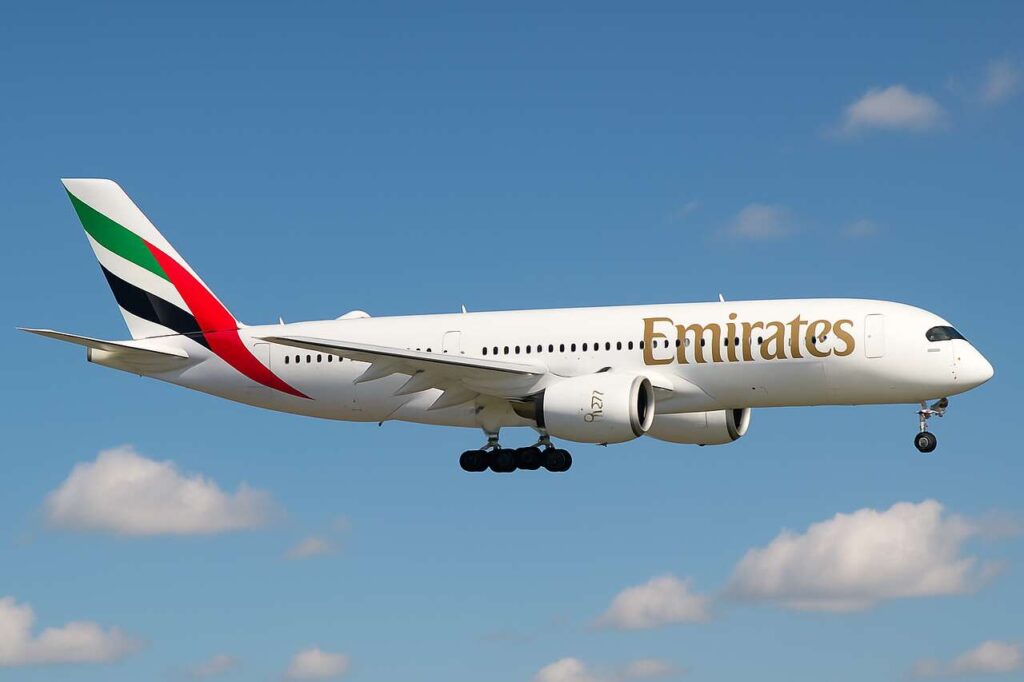
Emirates, the Dubai-based carrier renowned for operating the world’s largest fleet of Airbus A380 superjumbos, has made a strategic decision that signals a significant shift in its long-term fleet planning. The airline recently placed a substantial order for the Airbus A350, raising questions about the future role of its beloved double-decker aircraft. This acquisition reflects broader changes in the aviation landscape, where fuel efficiency, operational flexibility and evolving passenger demands are reshaping airline strategies. Understanding whether this order represents a direct replacement strategy or a complementary expansion requires examining the airline’s operational needs, market conditions and the distinct characteristics of both aircraft types.
The context of Emirates and the Airbus A380
Emirates’ commitment to the superjumbo
Emirates has maintained an unwavering relationship with the Airbus A380 since introducing the aircraft into its fleet. The airline operates more than 115 A380s, representing the largest concentration of these superjumbos in any single fleet worldwide. This commitment has defined the carrier’s brand identity, with the aircraft becoming synonymous with Emirates’ premium service offerings and hub-based network model.
The A380 has enabled Emirates to transport substantial passenger volumes on key routes connecting Dubai to major cities across six continents. The aircraft’s capacity, typically configured with over 500 seats across multiple classes, has proven particularly advantageous on high-demand routes where slot constraints limit flight frequency options.
Challenges facing the A380 programme
Despite Emirates’ loyalty, the A380 programme faced mounting challenges that ultimately led to production cessation. Airbus announced the discontinuation of A380 manufacturing, with final deliveries completed, leaving Emirates without the option to order new superjumbos. Several factors contributed to this decision:
- Higher fuel consumption compared to newer twin-engine widebody aircraft
- Limited airport infrastructure capable of accommodating the aircraft’s size
- Reduced demand for very large aircraft as airlines favour point-to-point operations
- Maintenance complexities and higher operating costs per available seat mile
These realities have forced Emirates to reconsider its fleet composition as existing A380s age and require eventual replacement. The airline must balance its successful business model built around the superjumbo with the economic and operational advantages offered by newer aircraft technologies.
Fleet renewal strategy at Emirates
The necessity of modernisation
Emirates faces the inevitable challenge of fleet renewal as its A380s approach mid-life and beyond. The airline’s strategic planning must account for aircraft lifecycle management, ensuring continuous fleet modernisation whilst maintaining service standards and network coverage. Fleet renewal is not merely about replacing old aircraft but optimising the entire operational ecosystem for future market conditions.
The carrier has publicly acknowledged that its A380 fleet will require phased replacement over the coming decades. This timeline creates both challenges and opportunities, allowing Emirates to introduce next-generation aircraft that offer superior economics whilst potentially maintaining capacity on critical routes through alternative strategies.
Diversification and flexibility
Emirates’ order for 65 Airbus A350 aircraft represents a strategic diversification beyond its traditional reliance on very large aircraft. This acquisition provides operational flexibility that the A380-heavy fleet lacks, enabling the airline to:
- Serve thinner routes that cannot sustain A380 capacity
- Increase flight frequencies on existing routes rather than relying solely on larger aircraft
- Access airports with infrastructure limitations for superjumbos
- Reduce financial exposure to fuel price volatility through improved efficiency
| Strategic objective | A380 approach | A350 approach |
|---|---|---|
| Capacity deployment | High-volume single frequency | Moderate capacity with multiple frequencies |
| Route flexibility | Limited to high-demand markets | Adaptable to various demand levels |
| Operational costs | Higher per flight, lower per seat when full | Lower per flight, competitive per seat |
This balanced approach suggests Emirates is preparing for a future where fleet composition reflects diverse operational requirements rather than concentration on a single aircraft type.
The purchase of the Airbus A350: motivations and stakes
Economic drivers behind the decision
The A350 order stems from compelling economic considerations that directly address Emirates’ long-term profitability objectives. The aircraft’s advanced aerodynamics and lightweight composite construction deliver fuel efficiency improvements of approximately 25% compared to older generation widebodies. Given that fuel represents one of the largest operational expenses for airlines, these savings translate into substantial financial benefits over the aircraft’s operational lifespan.
Additionally, the A350’s twin-engine configuration reduces maintenance complexity and costs compared to four-engine aircraft. The commonality of systems and components across the A350 family enables streamlined training programmes, parts inventory management and operational procedures, creating further cost efficiencies.
Strategic network expansion
Beyond replacement considerations, the A350 acquisition enables Emirates to pursue network strategies previously constrained by aircraft availability. The A350’s range capabilities allow non-stop services to destinations that may not generate sufficient demand for A380 deployment but represent valuable additions to the network. This expansion potential includes:
- Secondary cities in existing markets with growing business and leisure travel
- Emerging destinations in Africa, South America and secondary Asian markets
- Seasonal routes where year-round A380 deployment would be uneconomical
- Ultra-long-haul point-to-point services bypassing the Dubai hub
These capabilities position Emirates to compete more effectively with airlines operating comprehensive networks of smaller widebody aircraft, particularly on routes where the carrier currently lacks presence.
Comparison between the Airbus A380 and the A350
Technical specifications and performance
The A380 and A350 represent fundamentally different design philosophies, each optimised for distinct operational contexts. The A380, with its double-deck configuration, prioritises maximum passenger capacity, typically seating 500-600 passengers depending on configuration. Its four-engine layout provides redundancy and power but comes with higher fuel consumption and maintenance requirements.
In contrast, the A350 employs a conventional single-aisle, twin-engine design optimised for efficiency. The aircraft seats approximately 300-350 passengers in typical three-class configurations, roughly 60% of A380 capacity. However, its advanced materials and systems deliver superior fuel efficiency per seat and lower operating costs across most metrics.
| Specification | Airbus A380 | Airbus A350-900 |
|---|---|---|
| Typical seating | 500-600 passengers | 300-350 passengers |
| Range | 8,000 nautical miles | 8,100 nautical miles |
| Fuel efficiency | Baseline | 25% improvement per seat |
| Engine configuration | Four engines | Two engines |
Operational considerations
Beyond technical specifications, operational realities significantly influence aircraft selection. The A380 requires specialised ground infrastructure, including reinforced taxiways, larger gate areas and compatible jetways, limiting the number of airports that can accommodate the aircraft. This constraint restricts route flexibility and can increase turnaround times at congested airports.
The A350 operates from standard widebody gates and infrastructure, providing access to virtually all international airports. Its smaller footprint enables more flexible scheduling and reduces the risk of operational disruptions. These practical advantages become increasingly important as airlines seek to maximise asset utilisation and maintain schedule reliability.
Potential impact on passenger experience
Cabin environment and comfort
Passengers have grown accustomed to the spacious cabin environment that the A380 provides, particularly in premium classes. The aircraft’s wide fuselage accommodates generous seat widths, aisle space and amenities that have become signature elements of the Emirates experience. The upper deck, in particular, offers a quieter, more exclusive atmosphere that premium passengers value highly.
The A350, whilst smaller, incorporates modern cabin technologies that enhance passenger comfort. These include:
- Advanced air filtration and humidity control systems reducing fatigue on long flights
- Larger windows with electronic dimming for improved natural light management
- Quieter cabin environment due to improved insulation and engine placement
- LED mood lighting systems that adjust to circadian rhythms
Emirates will need to carefully design A350 cabin configurations that maintain brand consistency whilst adapting to the aircraft’s different dimensions and capabilities.
Service frequency versus capacity
The transition towards A350 operations may fundamentally alter how passengers experience Emirates services. Rather than single daily A380 flights on certain routes, the airline might deploy multiple A350 frequencies, providing passengers with greater scheduling flexibility. This shift could prove particularly valuable for business travellers who prioritise departure time options over onboard space.
However, leisure passengers and families who appreciate the A380’s spaciousness and onboard amenities, such as shower suites and onboard lounges in First Class, may perceive the change as a reduction in service quality. Emirates must balance these competing preferences whilst managing passenger expectations during the fleet transition.
Consequences for the aviation industry
Market signals and manufacturer strategies
Emirates’ A350 order sends clear signals to aircraft manufacturers about airline priorities. The decision validates Airbus’s strategy of focusing on efficient twin-engine widebodies rather than continuing very large aircraft production. It also demonstrates that even airlines previously committed to the superjumbo model are adapting to changed market conditions favouring operational flexibility and efficiency over maximum capacity.
This shift influences manufacturer product development strategies, investment priorities and marketing approaches. Boeing’s decision to focus on aircraft like the 787 Dreamliner and 777X rather than developing A380 competitors appears increasingly vindicated by market trends, including Emirates’ evolving fleet strategy.
Competitive dynamics and hub operations
Emirates’ fleet evolution affects competitive dynamics among Gulf carriers and global long-haul operators. The airline’s ability to deploy right-sized aircraft on diverse routes enhances its competitive position against carriers already operating flexible fleets. This capability becomes particularly important as point-to-point long-haul services grow and traditional hub-and-spoke models face increased competition.
Other airlines observing Emirates’ transition may accelerate their own fleet renewal programmes, creating ripple effects throughout the industry. The secondary market for used A380s remains limited, potentially affecting residual values and retirement decisions across the small community of A380 operators.
Emirates’ Airbus A350 order represents a pragmatic evolution rather than an outright replacement of its A380 fleet. The airline is positioning itself for a future where diverse aircraft types serve different strategic purposes within an integrated network. Whilst the A350 will undoubtedly assume routes currently operated by ageing A380s, the carrier appears committed to maintaining superjumbo operations on core high-demand routes where the aircraft’s capacity advantages remain relevant. This balanced approach reflects the complex realities facing modern airlines, where no single aircraft type can optimally serve all operational requirements. The success of this strategy will depend on Emirates’ ability to manage the transition whilst preserving the premium brand experience that has defined its market position.