



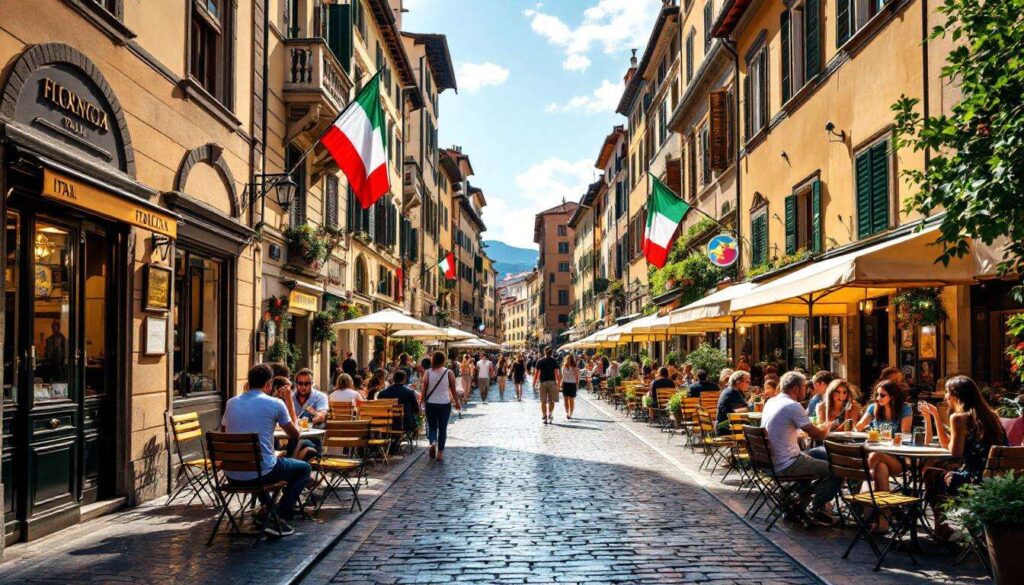
A newly published report has identified five European cities that stand out as exceptional cultural destinations for travellers seeking authentic heritage experiences, architectural marvels, and artistic excellence. These urban centres combine centuries of history with vibrant contemporary cultural scenes, offering visitors unparalleled opportunities to immerse themselves in Europe’s rich civilisational tapestry. From Mediterranean coastlines to Central European capitals, these locations represent the continent’s most compelling cultural offerings.
The architectural treasures of Barcelona
Barcelona emerges as a premier destination for architecture enthusiasts, primarily due to the extraordinary legacy of Antoni Gaudí. The Catalan capital showcases an unmatched concentration of modernist masterpieces that have transformed the cityscape into an open-air museum of innovative design.
Gaudí’s iconic landmarks
The Sagrada Família remains Barcelona’s most recognisable monument, with its soaring spires and intricate facades continuing to evolve despite construction beginning in 1882. This basilica represents Gaudí’s visionary approach to sacred architecture, blending natural forms with spiritual symbolism. Visitors can explore:
- The Nativity Facade, completed during Gaudí’s lifetime
- The Passion Facade, depicting Christ’s suffering
- The interior forest of columns inspired by tree structures
- The museum detailing the building’s ongoing construction
Park Güell offers another dimension of Gaudí’s genius, where architectural elements merge seamlessly with landscape design. The park’s mosaic-covered structures, serpentine benches, and organic forms demonstrate the architect’s ability to create spaces that feel both fantastical and harmonious.
Beyond Gaudí
Barcelona’s architectural significance extends well beyond a single creator. The Gothic Quarter preserves medieval structures including the Cathedral of Barcelona, whilst the Eixample district showcases the geometric urban planning of Ildefons Cerdà alongside numerous modernist buildings by contemporaries of Gaudí such as Lluís Domènech i Montaner.
| Architectural Period | Key Examples | Historical Significance |
|---|---|---|
| Roman | City walls, Temple of Augustus | Foundation era (1st century BC) |
| Gothic | Cathedral, Santa Maria del Mar | Medieval prosperity (13th-15th centuries) |
| Modernisme | Casa Batlló, La Pedrera | Catalan Renaissance (1890-1910) |
This architectural diversity establishes Barcelona as an essential stop for anyone interested in how urban environments evolve across centuries, naturally leading to another European capital equally renowned for its historical layers.
The historical richness of Rome
Rome’s designation as a top cultural destination stems from its unparalleled concentration of historical sites spanning nearly three millennia. The Eternal City functions as a living chronicle of Western civilisation, where ancient ruins coexist with Renaissance palaces and Baroque churches.
Ancient Roman heritage
The Colosseum stands as Rome’s most iconic monument, representing the engineering prowess and entertainment culture of the Roman Empire. This amphitheatre, capable of holding 50,000 spectators, hosted gladiatorial contests and public spectacles that defined Roman social life. Nearby, the Roman Forum preserves the political and commercial heart of ancient Rome, with temples, basilicas, and triumphal arches revealing the empire’s administrative sophistication.
Vatican City treasures
Within Rome lies the independent state of Vatican City, housing some of humanity’s greatest artistic achievements. The Sistine Chapel features Michelangelo’s ceiling frescoes, whilst St Peter’s Basilica showcases Renaissance and Baroque architecture on a monumental scale. The Vatican Museums contain:
- Classical sculptures including the Laocoön Group
- Raphael’s Rooms with their magnificent frescoes
- Egyptian and Etruscan antiquities
- Contemporary religious art collections
The concentration of artistic masterworks within this small territory makes it an essential component of Rome’s cultural appeal, complementing the city’s secular attractions with spiritual and artistic dimensions that bridge to another European capital celebrated for its museums.
The artistic gems of Paris
Paris maintains its position as a global artistic capital through an extraordinary collection of museums, galleries, and cultural institutions that preserve and display centuries of creative achievement. The French capital’s commitment to the arts permeates its urban fabric, from grand museums to intimate galleries.
World-class museum collections
The Louvre remains the world’s most visited museum, housing approximately 380,000 objects spanning from ancient civilisations to the mid-19th century. Beyond the Mona Lisa, visitors encounter Egyptian antiquities, Greek sculptures, and masterpieces by Vermeer, Caravaggio, and Delacroix. The Musée d’Orsay complements this offering with its unmatched collection of Impressionist and Post-Impressionist works, whilst the Centre Pompidou showcases modern and contemporary art in a revolutionary building that itself became an architectural landmark.
Artistic neighbourhoods and monuments
Paris’s artistic heritage extends beyond museum walls into its streets and districts. Montmartre preserves its bohemian atmosphere, where artists like Picasso and Toulouse-Lautrec once worked. The architectural monuments themselves function as artistic statements:
- Notre-Dame Cathedral exemplifying Gothic architecture
- The Eiffel Tower as an iron lattice sculpture
- Sainte-Chapelle’s stunning stained glass windows
- The Arc de Triomphe celebrating French military history
This integration of art into daily urban life distinguishes Paris from cities where culture remains confined to specific venues, a characteristic shared with a Central European capital equally committed to preserving its cultural legacy.
The cultural heritage of Prague
Prague’s recognition as a top cultural destination reflects its remarkably preserved historical centre and its significance as a crossroads of European cultural movements. The Czech capital escaped major destruction during the 20th century’s conflicts, allowing its architectural and cultural heritage to survive intact.
Architectural harmony across centuries
The Old Town Square encapsulates Prague’s architectural diversity, featuring Gothic, Renaissance, Baroque, and Art Nouveau buildings surrounding a single public space. The Astronomical Clock, installed in 1410, continues to draw crowds with its hourly procession of apostles. Prague Castle, one of the largest castle complexes globally, dominates the city skyline and contains St Vitus Cathedral, a Gothic masterpiece requiring nearly six centuries to complete.
Literary and musical traditions
Prague’s cultural significance extends beyond visual arts to encompass rich literary and musical heritage. The city inspired writers including Franz Kafka, whose presence permeates the Jewish Quarter, and Milan Kundera. Musically, Prague served as home to composers Antonín Dvořák and Bedřich Smetana, whilst Mozart premiered Don Giovanni at the Estates Theatre in 1787.
| Cultural Aspect | Notable Examples | Visitor Experience |
|---|---|---|
| Architecture | Charles Bridge, Dancing House | Walking tours, photography |
| Music | National Theatre, Rudolfinum | Classical concerts, opera performances |
| Literature | Kafka Museum, Strahov Library | Exhibitions, historic manuscripts |
This multifaceted cultural offering positions Prague as a destination where visitors engage with European heritage across multiple artistic disciplines, much like another imperial capital renowned for its cultural institutions.
The wonders of Vienna
Vienna completes this selection of top cultural destinations through its imperial heritage and its continuing role as a centre for classical music and refined arts. The Austrian capital preserves the grandeur of the Habsburg Empire whilst maintaining vibrant contemporary cultural scenes.
Imperial palaces and museums
The Schönbrunn Palace, with its 1,441 rooms and expansive gardens, exemplifies Habsburg opulence and serves as Austria’s most visited cultural monument. The Hofburg Palace, the former imperial residence in the city centre, now houses multiple museums including the Imperial Apartments and the Sisi Museum. The Kunsthistorisches Museum ranks among Europe’s finest art museums, featuring:
- Bruegel’s largest collection of paintings worldwide
- Masterworks by Titian, Vermeer, and Velázquez
- Egyptian and Near Eastern antiquities
- The Imperial Treasury with crown jewels
Musical legacy
Vienna’s identity as the City of Music rests on its associations with composers who defined Western classical music. Mozart, Beethoven, Brahms, and Mahler all worked in Vienna, whilst the Strauss family made the city synonymous with the waltz. The Vienna Philharmonic maintains this tradition through performances at the Musikverein, whilst the State Opera offers world-class productions throughout the season. The city’s coffee house culture, recognised by UNESCO as intangible cultural heritage, provides spaces where intellectual and artistic exchange continues to flourish.
These five cities represent Europe’s most compelling cultural destinations, each offering distinct yet complementary experiences. Barcelona dazzles with architectural innovation, Rome overwhelms with historical depth, Paris captivates through artistic excellence, Prague charms with preserved heritage, and Vienna enchants with imperial elegance and musical tradition. Together, they form an essential itinerary for travellers seeking to engage with the cultural foundations of European civilisation whilst experiencing living cities that continue to create and innovate.