



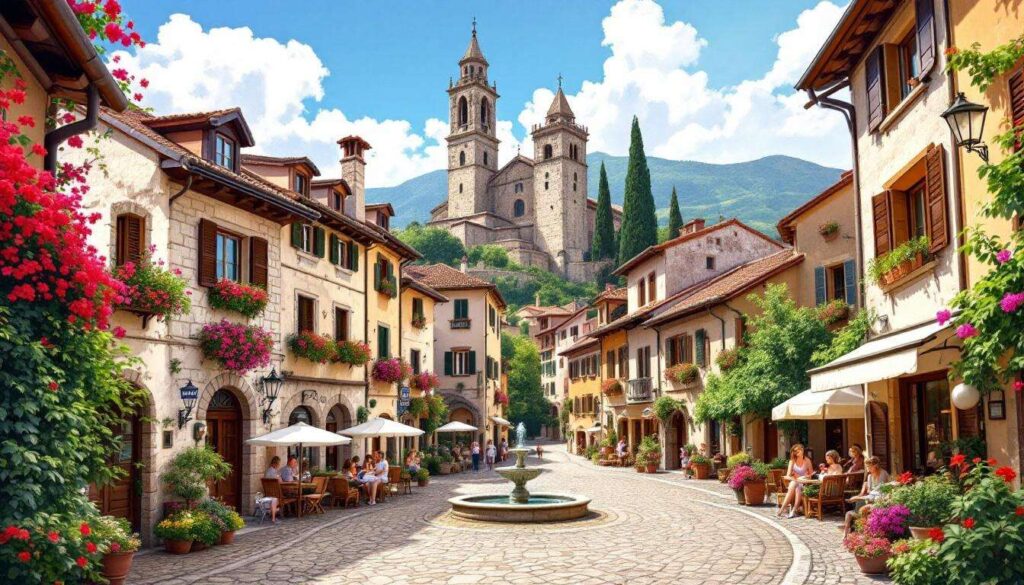
Italy’s lesser-known villages offer an escape from crowded tourist hotspots, revealing centuries of history preserved in cobblestone streets, ancient towers and pastel-coloured facades. These enchanting destinations showcase the country’s architectural diversity, from medieval hilltop settlements to coastal fishing hamlets, each with its own distinctive character. Travellers seeking authentic Italian experiences will find these six fairy-tale towns provide glimpses into traditional lifestyles that have endured through generations.
Discovering the wonders of San Gimignano
The medieval skyline of towers
San Gimignano’s silhouette dominates the Tuscan landscape with its fourteen surviving towers, remnants of the seventy that once symbolised wealthy families’ power during the Middle Ages. The town earned its UNESCO World Heritage status in 1990, recognising the exceptional preservation of its medieval urban architecture. Visitors ascending the Torre Grossa, the tallest tower at 54 metres, gain panoramic views across vineyards and olive groves stretching towards Siena.
Cultural treasures within the walls
The town’s artistic heritage includes remarkable frescoes adorning the Collegiata di Santa Maria Assunta, where 14th-century masterpieces depict biblical scenes across vaulted ceilings. The artistic legacy extends to:
- Ghirlandaio’s frescoes in the Chapel of Santa Fina
- Benozzo Gozzoli’s works in the Sant’Agostino church
- The Civic Museum housing Lippo Memmi’s Maestà
- Medieval torture instruments displayed in the Torre del Diavolo
Local vineyards produce Vernaccia di San Gimignano, a crisp white wine that has been celebrated since Renaissance times, making the town equally appealing to oenophiles and history enthusiasts.
Beyond Tuscany’s rolling hills, another architectural phenomenon awaits in the southern region of Puglia, where conical structures create an entirely different fairy-tale atmosphere.
The enchantment of the village of Alberobello
The unique trulli architecture
Alberobello’s landscape features over 1,500 trulli, whitewashed limestone dwellings with distinctive conical roofs constructed without mortar. These structures, built using prehistoric dry-stone techniques, served practical purposes when 15th-century residents needed easily dismantled homes to avoid taxation. The Rione Monti district contains the highest concentration of these buildings, creating narrow streets lined with shops, restaurants and galleries housed within the iconic structures.
Exploring the trulli districts
| District | Number of trulli | Main characteristics |
|---|---|---|
| Rione Monti | Over 1,000 | Commercial area with shops and cafés |
| Rione Aia Piccola | Approximately 400 | Residential quarter with authentic atmosphere |
The Trullo Sovrano stands as the only two-storey trullo open to visitors, offering insights into traditional living arrangements. Symbols painted on conical roofs represent religious, astrological or pagan meanings, adding mystical elements to the architectural wonder.
From Puglia’s inland curiosities, the journey continues northward to the Ligurian coast, where colourful houses cling to dramatic cliffs overlooking the Mediterranean.
The romantic atmosphere of Vernazza
A jewel of Cinque Terre
Vernazza ranks among the five villages comprising Cinque Terre, distinguished by its natural harbour and medieval castle ruins. The town’s pastel-coloured buildings cascade down steep slopes towards a small piazza opening onto the sea, creating one of Italy’s most photographed coastal scenes. The Doria Castle, perched above the village, offers defensive walls and watchtowers dating to the 11th century.
Coastal activities and local traditions
The village maintains its fishing heritage whilst welcoming visitors who appreciate:
- Swimming from rocky beaches in the crystalline Ligurian Sea
- Hiking the Sentiero Azzurro coastal path connecting the five villages
- Sampling anchovies and pesto prepared using traditional recipes
- Exploring the Chiesa di Santa Margherita d’Antiochia with its octagonal bell tower
Local restaurants serve sciacchetrà, a sweet dessert wine produced from grapes grown on terraced vineyards that have shaped the landscape for centuries. The absence of vehicle access preserves Vernazza’s tranquil character, accessible only by train, boat or footpath.
Leaving the coastal splendour behind, central Italy reveals a dramatically different setting where an ancient village perches atop an eroding plateau, accessible only by a pedestrian bridge.
The historical charm of Civita di Bagnoregio
The dying town on a plateau
Civita di Bagnoregio occupies a crumbling tufa outcrop in the Lazio region, earning its nickname “the dying town” due to ongoing erosion that has isolated it from the modern world. Founded by Etruscans over 2,500 years ago, the settlement now hosts fewer than a dozen permanent residents. A 300-metre footbridge provides the sole access point, crossing a dramatic valley that separates the ancient village from its newer counterpart, Bagnoregio.
Architectural and geological significance
The town’s precarious position creates an atmosphere frozen in time, with Renaissance palaces and medieval churches lining narrow cobblestone streets. Key features include:
- The Church of San Donato, showcasing a wooden crucifix from the 15th century
- Etruscan cave dwellings carved into the tufa rock
- The Porta Santa Maria gateway adorned with stone lions
- Panoramic viewpoints revealing the Valle dei Calanchi landscape
Geological instability continues threatening the village’s existence, with experts estimating ongoing erosion at approximately seven centimetres annually. Despite these challenges, restoration efforts and growing tourism provide economic incentives for preservation.
From this landlocked hilltop retreat, the journey returns to the Italian Riviera, where another coastal gem offers a contrasting blend of natural beauty and sophisticated elegance.
The tranquillity of Portofino
An exclusive harbour village
Portofino’s crescent-shaped harbour has attracted aristocrats, artists and celebrities since the 19th century, transforming a fishing village into one of Italy’s most exclusive destinations. The pastel-painted buildings surrounding the Piazzetta create an intimate atmosphere despite the town’s international reputation. Luxury yachts moored in the harbour contrast with traditional fishing boats, reflecting Portofino’s evolution whilst maintaining its maritime character.
Natural surroundings and cultural sites
Beyond the harbour’s glamour, the surrounding Portofino Regional Natural Park protects Mediterranean vegetation and coastal ecosystems. Visitors exploring the area discover:
- The Church of San Giorgio, containing relics of the patron saint
- Castello Brown, a 16th-century fortress with terraced gardens
- Hiking trails leading to the lighthouse at Punta del Capo
- The Abbey of San Fruttuoso, accessible by boat or footpath
| Attraction | Distance from harbour | Estimated visit time |
|---|---|---|
| Castello Brown | 10-minute walk | 45 minutes |
| Church of San Giorgio | 5-minute walk | 20 minutes |
| Punta del Capo lighthouse | 30-minute hike | 1 hour |
The town’s car-free centre preserves its peaceful atmosphere, with visitors arriving by boat, bus or on foot through the regional park’s trails.
Returning inland to Tuscany’s wine country, the final destination combines medieval architecture with renowned viticulture, offering yet another dimension to Italy’s small-town treasures.
The medieval elegance of Montepulciano
Renaissance architecture and wine heritage
Montepulciano crowns a limestone ridge in southern Tuscany, its Renaissance palaces and churches reflecting the wealth generated by centuries of wine production. The town’s main thoroughfare, the Corso, climbs steeply through historic districts towards the Piazza Grande, where the Palazzo Comunale and the Duomo dominate the skyline. Antonio da Sangallo the Elder designed several buildings during the 16th century, establishing the architectural harmony visible throughout the town.
Vino Nobile and underground cellars
The production of Vino Nobile di Montepulciano, one of Italy’s oldest wines, has shaped the local economy since Etruscan times. The wine earned DOCG status in 1980, recognising its quality and traditional production methods. Wine enthusiasts visiting Montepulciano can:
- Tour historic cellars carved into the tufa beneath Renaissance palaces
- Taste Vino Nobile alongside local pecorino cheese and pici pasta
- Attend the Bravio delle Botti festival featuring barrel-rolling competitions
- Visit the Contucci and Cantina del Redi wineries in the town centre
The Church of San Biagio, situated outside the walls, exemplifies High Renaissance architecture with its Greek cross plan and harmonious proportions designed by Antonio da Sangallo. Views from the town walls encompass the Val d’Orcia and Val di Chiana, revealing the agricultural landscape that sustains Montepulciano’s wine traditions.
These six Italian towns demonstrate how geography, history and tradition combine to create distinctive destinations that transport visitors beyond ordinary tourism. From San Gimignano’s medieval towers to Alberobello’s conical trulli, from Vernazza’s coastal charm to Civita di Bagnoregio’s dramatic isolation, from Portofino’s refined elegance to Montepulciano’s wine-soaked heritage, each location offers authentic experiences that justify their fairy-tale reputations. Preservation efforts ensure these architectural treasures continue enchanting future generations whilst maintaining the cultural traditions that define their unique characters.