



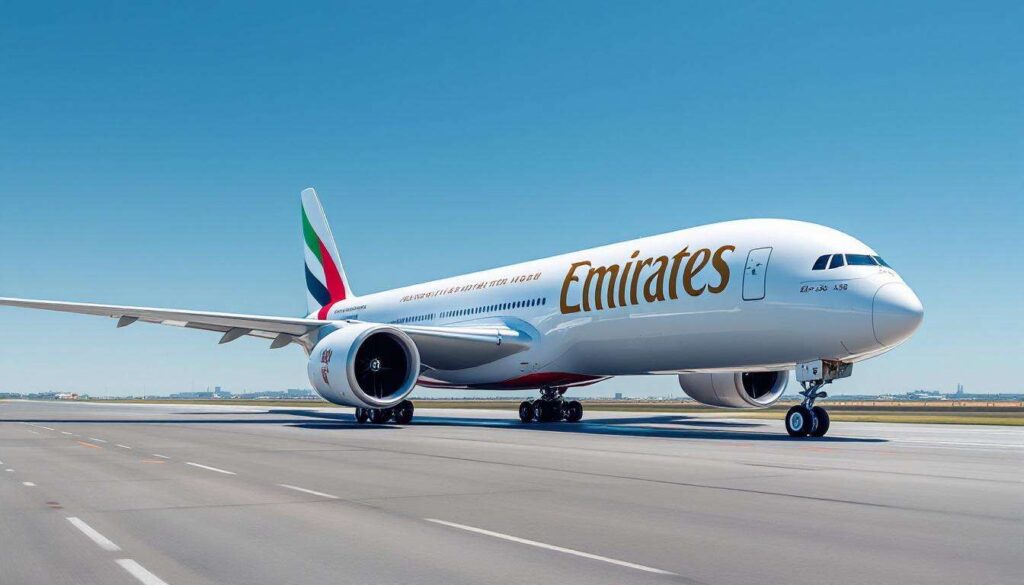
Emirates operates the world’s largest fleet of Airbus A380 aircraft, with over 120 units in service. However, as these iconic double-decker jets approach the end of their operational lifespan, the Dubai-based carrier faces a critical decision regarding their replacement. The airline must balance capacity requirements, operational efficiency, environmental considerations, and route network demands whilst maintaining its position as a global aviation leader. Industry analysts closely monitor Emirates’ fleet strategy, as the choices made will shape the carrier’s future for decades to come.
Analysis of the end of life of Airbus A380 at Emirates
The operational timeline of Emirates’ A380 fleet
Emirates received its first Airbus A380 in 2008, making the carrier an early adopter of the world’s largest passenger aircraft. The airline’s A380 fleet has an average age of approximately 10 years, with the oldest aircraft now approaching 15 years of service. Whilst commercial aircraft typically operate for 25 to 30 years, the A380’s unique characteristics and market conditions influence its retirement schedule.
The carrier has invested heavily in cabin refurbishments and technical upgrades to extend the service life of these aircraft. Major maintenance checks occur at regular intervals, with costs escalating as aircraft age. Emirates must weigh these increasing maintenance expenses against the benefits of continued operation.
Economic factors driving replacement decisions
Several economic considerations influence the retirement timeline for Emirates’ A380 fleet:
- Rising maintenance costs as aircraft age beyond 15 years
- Fuel efficiency improvements in newer aircraft models
- Reduced residual value and limited secondary market demand
- Increasing spare parts costs for ageing airframes
- Operational flexibility requirements for post-pandemic travel patterns
The cessation of A380 production in 2021 further complicates the situation. Without new aircraft entering the market, spare parts availability and technical support may become challenging in the long term. This reality accelerates Emirates’ need to identify suitable replacement aircraft.
Environmental regulations and sustainability pressures
Global aviation faces mounting pressure to reduce carbon emissions. The A380, whilst offering exceptional passenger capacity, consumes significantly more fuel per flight than modern twin-engine aircraft. Environmental regulations in key markets increasingly penalise less efficient aircraft through higher landing fees and carbon taxes.
| Aircraft Type | Fuel Consumption (litres per 100 km per seat) | CO2 Emissions (kg per 100 km per seat) |
|---|---|---|
| Airbus A380 | 3.1 | 7.8 |
| Boeing 777-9 | 2.8 | 7.0 |
| Airbus A350-1000 | 2.6 | 6.5 |
These environmental considerations align with Emirates’ stated sustainability goals and influence the characteristics sought in replacement aircraft. The airline’s commitment to reducing its carbon footprint necessitates a shift towards more fuel-efficient models.
Understanding these retirement drivers provides essential context for evaluating Emirates’ strategic options as the carrier plans its next generation fleet composition.
Emirates’ fleet renewal ambitions
Strategic capacity requirements
Emirates built its business model around high-capacity aircraft serving its Dubai hub, facilitating connections between six continents. The airline’s A380 fleet typically carries between 489 and 615 passengers depending on configuration, providing unmatched capacity on high-demand routes.
Any replacement strategy must address this capacity equation. The carrier faces a fundamental choice: maintain similar per-flight capacity with large aircraft or shift towards increased flight frequency using smaller widebodies. This decision impacts airport slot utilisation, crew scheduling, and the overall network structure.
Network flexibility and route optimisation
The aviation landscape has evolved considerably since Emirates first deployed the A380. Point-to-point travel has gained market share relative to traditional hub-and-spoke models. Additionally, the pandemic accelerated changes in travel patterns and demand distribution across routes.
Modern fleet planning emphasises flexibility, enabling carriers to adjust capacity dynamically across their network. Smaller widebody aircraft offer advantages in this regard:
- Ability to serve thinner routes economically
- Easier capacity adjustments based on seasonal demand
- Access to airports with infrastructure limitations
- Reduced financial risk on new or experimental routes
- More frequent service options on key city pairs
Financial investment and delivery timelines
Fleet replacement represents a multi-billion dollar investment. Emirates must secure financing whilst managing cash flow and maintaining shareholder returns. The airline’s approach to this capital-intensive undertaking will unfold over a 10 to 15 year period, requiring careful phasing of aircraft retirements and deliveries.
Manufacturing lead times present additional challenges. Aircraft orders placed today typically require five to seven years for delivery, depending on production backlogs. This timeline necessitates forward planning to avoid capacity gaps as A380s retire.
These ambitious renewal plans require careful consideration of which specific aircraft types can meet Emirates’ unique operational requirements whilst supporting its commercial objectives.
Which modern aircraft to replace the A380 ?
The Boeing 777X family as a natural successor
The Boeing 777-9 emerges as a leading candidate for A380 replacement. With a capacity of approximately 400 to 425 passengers in typical configurations, it offers substantial size whilst incorporating modern technology. The aircraft features new composite wings, advanced engines, and improved aerodynamics that deliver fuel efficiency gains of approximately 20 to 25 per cent compared to older 777 variants.
Emirates already operates an extensive Boeing 777 fleet, providing operational synergies including pilot cross-qualification, maintenance expertise, and spare parts inventory. The 777-9 maintains this fleet commonality whilst offering enhanced performance.
Airbus A350-1000 specifications and advantages
The Airbus A350-1000 represents another compelling option. This aircraft seats 350 to 410 passengers and delivers exceptional fuel efficiency through its carbon-fibre composite airframe and Rolls-Royce Trent XWB engines. The A350-1000 offers a range of up to 16,100 kilometres, enabling non-stop service on ultra-long-haul routes.
Key advantages of the A350-1000 include:
- Superior fuel efficiency per seat compared to competing aircraft
- Lower maintenance costs due to composite construction
- Advanced cabin technology and passenger comfort features
- Proven reliability in airline operations worldwide
- Strong environmental credentials supporting sustainability goals
Capacity comparison and operational considerations
| Aircraft Model | Typical Seating | Maximum Range (km) | Fuel Efficiency Advantage |
|---|---|---|---|
| Airbus A380 | 489-615 | 14,800 | Baseline |
| Boeing 777-9 | 400-425 | 13,500 | +20-25% |
| Airbus A350-1000 | 350-410 | 16,100 | +25-30% |
Neither replacement option matches the A380’s absolute capacity, suggesting Emirates may require multiple aircraft to maintain equivalent seat availability on peak routes. This capacity gap influences fleet planning and potentially necessitates increased flight frequencies or acceptance of reduced capacity on certain services.
The specific aircraft selection will likely reflect not only technical specifications but also the commercial relationships and negotiations Emirates conducts with manufacturers.
Emirates and Boeing: a strengthened partnership ?
Historical collaboration between Emirates and Boeing
Emirates maintains a long-standing relationship with Boeing, operating one of the world’s largest 777 fleets. This partnership has shaped both companies’ trajectories, with Emirates’ massive orders influencing Boeing’s product development decisions. The carrier currently operates over 130 Boeing 777 aircraft across various models.
The airline has already committed to the 777X programme with orders for multiple aircraft. These existing commitments suggest a continuation of the Boeing relationship, potentially extending to comprehensive A380 replacement.
Commercial negotiations and fleet deals
Aircraft acquisition involves complex negotiations extending beyond list prices. Airlines of Emirates’ scale command significant leverage, securing substantial discounts, favourable financing terms, and comprehensive support packages. These commercial considerations often prove as important as technical specifications in fleet decisions.
Potential elements of an expanded Boeing agreement might include:
- Volume discounts on large 777-9 orders
- Trade-in allowances for retiring A380 aircraft
- Extended warranty and maintenance support packages
- Training and simulator access for flight crews
- Flexible delivery schedules aligned with retirement timelines
Risks and considerations in Boeing dependency
Concentrating replacement orders with a single manufacturer carries inherent risks. Boeing has experienced production delays and certification challenges with the 777-9 programme, pushing initial deliveries years beyond original schedules. Such delays could disrupt Emirates’ fleet transition plans.
Additionally, relying predominantly on one manufacturer reduces competitive pressure and negotiating leverage for future orders. Industry best practice often involves maintaining relationships with multiple suppliers to ensure flexibility and competitive pricing.
These partnership dynamics exist alongside Emirates’ parallel discussions with Airbus regarding alternative solutions that might better serve specific operational requirements.
The choice of Airbus A350 for a greener fleet
Environmental performance and sustainability credentials
The Airbus A350-1000 delivers exceptional environmental performance, consuming approximately 25 to 30 per cent less fuel per seat than the A380. This efficiency translates directly into reduced carbon emissions, addressing both regulatory requirements and corporate sustainability commitments. The aircraft’s composite construction also reduces weight, further enhancing fuel economy.
Emirates has publicly committed to environmental stewardship, including targets for emissions reduction and fleet modernisation. The A350-1000 aligns closely with these sustainability objectives, offering immediate environmental benefits upon entry into service.
Operational economics and cost advantages
Beyond environmental benefits, the A350-1000 offers compelling economics. Lower fuel consumption reduces operating costs significantly, particularly important given fuel typically represents 25 to 30 per cent of airline operating expenses. Maintenance costs also trend lower due to the aircraft’s composite airframe and modern systems design.
The A350-1000’s range capabilities enable new route possibilities, including ultra-long-haul services that might prove uneconomical with larger, less efficient aircraft. This operational flexibility supports network expansion and competitive positioning.
Fleet diversification strategy
Incorporating the A350-1000 would diversify Emirates’ widebody fleet beyond its current Boeing concentration. This diversification provides several strategic advantages:
- Reduced exposure to single-manufacturer production or certification issues
- Enhanced negotiating position with both Airbus and Boeing
- Access to different technological approaches and innovations
- Operational redundancy if supply chain disruptions affect one manufacturer
- Broader pool of pilot and maintenance personnel in the employment market
A mixed replacement strategy utilising both Boeing 777-9 and Airbus A350-1000 aircraft might optimise Emirates’ fleet composition, matching aircraft capabilities to specific route requirements whilst maintaining competitive supplier relationships.
These fleet decisions ultimately determine how effectively Emirates can serve its extensive network of long-haul destinations as the A380 era concludes.
The impact on Emirates’ long-haul connections
Route network reconfiguration
Replacing the A380 with smaller aircraft necessitates network adjustments across Emirates’ global route structure. High-demand routes currently served by A380s, such as Dubai to London, New York, and Sydney, may require increased flight frequencies to maintain capacity. This frequency increase could actually benefit passengers through more convenient departure times and improved connectivity.
Conversely, some routes with marginal economics under A380 operations might become viable with more efficient replacement aircraft. The improved fuel efficiency and lower trip costs of modern widebodies enable profitable service on thinner routes previously inaccessible with very large aircraft.
Passenger experience and service standards
The A380’s spacious cabin and unique features, including onboard lounges and shower facilities in premium classes, have become synonymous with the Emirates brand. Replacement aircraft must maintain service standards and passenger expectations whilst working within different spatial constraints.
Modern widebody aircraft offer advanced cabin technology and design flexibility that can deliver excellent passenger experiences despite smaller overall dimensions. Emirates will need to carefully design cabin configurations that preserve its premium positioning and competitive differentiation.
Competitive positioning in global markets
Emirates’ competitors have largely avoided or retired A380 aircraft, instead building fleets around modern twin-engine widebodies. The carrier’s transition to similar equipment levels the competitive playing field in terms of operating economics and environmental performance. However, it also reduces a distinctive element of Emirates’ market identity.
The replacement strategy will determine whether Emirates maintains its capacity leadership on key routes or shifts towards a frequency-based competitive approach. Either path carries implications for market share, pricing power, and brand perception in the intensely competitive long-haul aviation sector.
Emirates stands at a pivotal juncture in its operational history as it prepares to transition from its iconic A380 fleet to a new generation of aircraft. The carrier’s decisions regarding Boeing 777-9 and Airbus A350-1000 acquisitions will shape its competitive position, environmental footprint, and financial performance for decades. Balancing capacity requirements, operational efficiency, sustainability objectives, and commercial considerations presents complex challenges. The eventual fleet composition will likely involve both manufacturers, optimising aircraft selection for specific route requirements whilst maintaining strategic flexibility. As the aviation industry evolves towards greater environmental accountability and operational efficiency, Emirates’ replacement strategy serves as a bellwether for the future of long-haul air travel.