



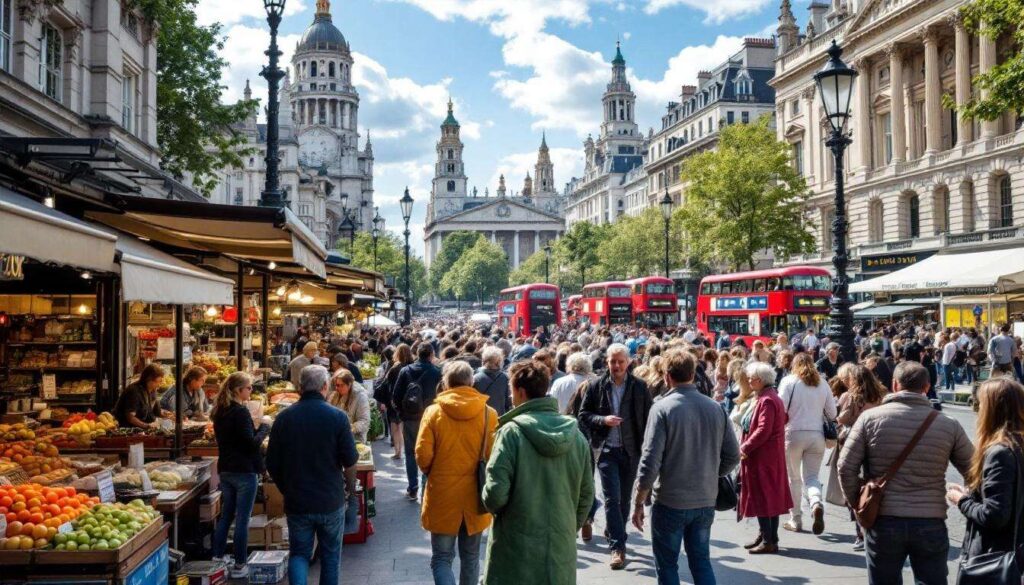
London’s true character reveals itself far beyond the queues at Buckingham Palace and the tourist-packed streets of Leicester Square. The city’s authentic charm lies in its vibrant markets, hidden alleyways, and the everyday rhythms of its diverse communities. Experiencing London as locals do means embracing the Underground during rush hour, discovering where Londoners actually eat, and understanding the unwritten rules that govern life in this sprawling metropolis. This guide unveils the insider knowledge that transforms a standard visit into an immersive journey through one of the world’s most dynamic cities.
Discovering local markets
Borough Market beyond the tourist trail
While Borough Market attracts considerable tourist attention, locals know the secret to experiencing it properly: arrive early on weekdays. Between 8am and 10am, the market transforms into a genuine hub where chefs source ingredients and residents collect their weekly provisions. The raclette stalls and gourmet demonstrations give way to meaningful conversations with stallholders who’ve traded there for decades.
Hidden gem markets across London
Beyond the famous names, London’s neighbourhood markets offer authentic local experiences:
- Broadway Market in Hackney: Saturday mornings reveal independent food producers and vintage clothing stalls frequented by East London residents
- Maltby Street Market: Tucked under railway arches in Bermondsey, this market operates weekends with minimal tourist presence
- Brixton Village: A covered market showcasing the area’s Caribbean heritage alongside contemporary eateries
- Chapel Market in Islington: A traditional street market where locals shop for fresh produce at considerably lower prices than supermarkets
The etiquette at these markets differs significantly from tourist spots. Londoners typically sample food only when offered, engage in brief but friendly exchanges with vendors, and carry reusable bags. Understanding these markets provides insight into London’s multicultural fabric and neighbourhood identities.
Exploring little-known neighbourhoods
Residential areas with authentic character
Stoke Newington in North London epitomises the type of neighbourhood tourists rarely visit but locals treasure. Its independent bookshops, community cafés, and Victorian terraces represent everyday London life. Similarly, Nunhead in South London offers remarkable cemetery walks and village-like atmosphere without the crowds of Hampstead.
Transport connections locals actually use
Experiencing London like a resident means understanding the Overground network, which often proves more efficient than the Underground for cross-London journeys. The Elizabeth Line has revolutionised East-West travel, whilst buses provide the most authentic street-level perspective of the city.
| Neighbourhood | Transport | Local highlight |
|---|---|---|
| Walthamstow | Victoria Line | Europe’s longest street market |
| Peckham | Overground | Rooftop bars with skyline views |
| Wapping | Overground | Thames-side pubs and warehouses |
| Kensal Rise | Overground | Independent cinema and bookshops |
These areas demonstrate how London’s character varies dramatically between postcodes, each neighbourhood maintaining distinct identity shaped by its history and communities. Moving beyond Zone 1 reveals where Londoners actually live, work, and socialise.
Tasting authentic London cuisine
Where locals eat breakfast and lunch
Forget the overpriced cafés near major attractions. Greasy spoon cafés remain integral to London’s food culture, serving full English breakfasts in no-frills environments where builders, taxi drivers, and office workers converge. E Pellicci in Bethnal Green and Regency Café in Pimlico exemplify this tradition.
Genuine curry houses and international cuisine
London’s reputation for curry excellence stems from its substantial South Asian communities. Rather than visiting Brick Lane’s tourist-focused restaurants, locals head to:
- Tooting: Home to exceptional South Indian and Pakistani restaurants
- Southall: Known as Little India, offering authentic Punjabi cuisine
- Green Street in East Ham: Featuring halal restaurants and sweet shops
- Edgware Road: Lebanese and Middle Eastern establishments popular with local communities
The pub culture beyond tourist traps
Authentic London pubs share common characteristics: locals propping up the bar, limited food menus focused on quality rather than variety, and landlords who know their regulars by name. The etiquette involves ordering at the bar, never clicking fingers for service, and understanding that “your round” means reciprocal buying within groups.
These culinary experiences connect directly to the city’s social fabric, where food serves as both sustenance and cultural expression.
Participating in cultural events
Free museums and galleries beyond the obvious
While the British Museum and National Gallery attract millions, smaller institutions offer more intimate experiences. The Geffrye Museum (now Museum of the Home) in Shoreditch, the Horniman Museum in Forest Hill, and the Whitechapel Gallery provide exceptional exhibitions without overwhelming crowds.
Community festivals and local celebrations
London’s cultural calendar extends far beyond Notting Hill Carnival. Neighbourhood festivals reveal the city’s diversity:
- Diwali celebrations on Ealing Road
- Greek Cypriot festivals in Palmers Green
- Turkish food festivals in Dalston
- Caribbean events throughout Brixton and Lewisham
- Polish cultural gatherings in Hammersmith
Theatre and performance venues locals frequent
Beyond the West End, fringe theatres and comedy clubs showcase emerging talent. The Almeida in Islington, Young Vic near Waterloo, and Bush Theatre in Shepherd’s Bush present productions that later transfer to major venues. Comedy clubs like Top Secret in Drury Lane offer performances by established comedians testing new material.
Understanding London’s cultural landscape means recognising how creativity flourishes in unexpected spaces throughout the city.
Visiting iconic music scene locations
Historic venues still hosting live music
The 100 Club on Oxford Street has hosted everyone from The Rolling Stones to punk pioneers, maintaining its commitment to live music despite rising rents. Similarly, The Troubadour in Earl’s Court continues the tradition established when Bob Dylan performed there, whilst Ronnie Scott’s in Soho remains the definitive jazz venue.
Record shops and music heritage sites
Vinyl culture thrives in London’s independent record shops. Rough Trade East in Brick Lane hosts in-store performances, whilst Sister Ray in Soho caters to serious collectors. Abbey Road Studios offers tours, though locals simply cross the famous zebra crossing without elaborate photoshoots blocking traffic.
Contemporary music venues in residential areas
The most exciting performances often occur in intimate venues across outer London:
- The Windmill in Brixton: Legendary for discovering new bands
- The Lexington in King’s Cross: Upstairs venue with exceptional acoustics
- Moth Club in Hackney: Former social club hosting diverse acts
- The Shacklewell Arms: Dalston venue with nightly performances
These spaces represent where London’s musical heritage continues evolving, far from corporate entertainment districts.
Adopting Londoners’ habits
Transport etiquette and unwritten rules
Navigating London like a local requires understanding implicit social codes. Stand on the right of escalators, allow passengers to exit before boarding, and avoid eye contact whilst simultaneously being aware of everyone around you. The Oyster card or contactless payment remains essential, with paper tickets immediately identifying tourists.
Social customs in public spaces
Londoners maintain personal space obsessively, queue with military precision, and apologise reflexively even when not at fault. In pubs, ordering requires catching the bartender’s eye without shouting or waving money. Parks serve as communal living rooms where locals picnic, exercise, and socialise, particularly during summer months.
Seasonal activities throughout the year
| Season | Local activity | Location |
|---|---|---|
| Spring | Blossom viewing in parks | Greenwich Park, Battersea Park |
| Summer | Outdoor cinema and swimming | Hampstead Heath ponds, rooftop screenings |
| Autumn | Bonfire Night celebrations | Alexandra Palace, Blackheath |
| Winter | Carol services and pantomimes | Local churches, community theatres |
Daily routines and lifestyle patterns
Understanding London’s rhythm means knowing when locals exercise (early morning or after work), where they buy groceries (local shops rather than tourist-area supermarkets), and how they spend weekends (farmers’ markets, parkruns, and Sunday roasts in neighbourhood pubs). The coffee culture centres on independent cafés rather than chains, with regulars establishing daily routines around favourite establishments.
Londoners balance the city’s intensity with surprising amounts of green space, using parks and commons as essential escapes from urban density. They navigate vast distances as routine, thinking nothing of crossing multiple zones for dinner or drinks.
Experiencing London authentically requires moving beyond landmark attractions to embrace the rhythms, spaces, and customs that define daily life for its residents. From morning markets to evening performances in neighbourhood venues, the city reveals its character through local habits and hidden corners. Understanding transport etiquette, discovering where communities actually gather, and appreciating the cultural diversity that shapes each neighbourhood transforms a superficial visit into genuine immersion. London’s essence lies not in its monuments but in its markets, its music venues, its pubs, and the unwritten codes that govern social interaction across this sprawling metropolis.