



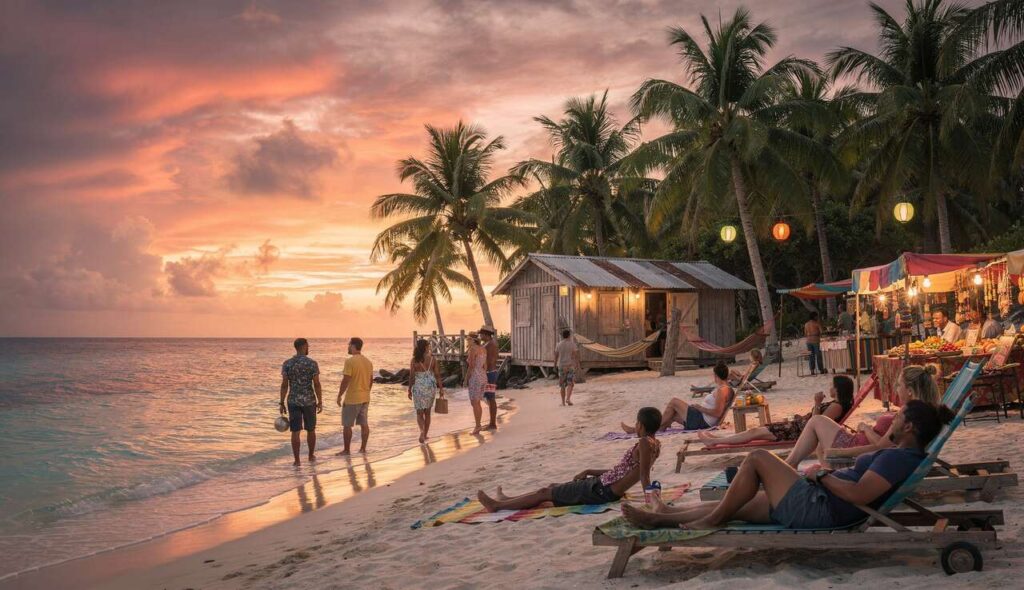
The allure of Caribbean living often conjures images of luxury resorts and expensive yacht clubs, yet a lesser-known reality exists for those seeking tropical paradise on a modest budget. One particular island stands out as a beacon for budget-conscious travellers and potential expatriates: Dominica, the Nature Isle of the Caribbean. This volcanic island nation offers an extraordinary opportunity to experience authentic Caribbean life without the hefty price tag attached to its more tourist-saturated neighbours. With careful planning and local knowledge, living comfortably on approximately $50 daily is entirely achievable, making it an attractive destination for digital nomads, retirees, and adventurers alike.
Discovering the perfect Caribbean island for living on a tight budget
Why Dominica stands apart from other Caribbean destinations
Dominica distinguishes itself through its undeveloped tourism infrastructure, which paradoxically becomes its greatest asset for budget travellers. Unlike commercialised islands such as Barbados or St. Lucia, Dominica has preserved its authentic character, resulting in significantly lower costs across accommodation, dining, and activities. The island’s economy remains largely agricultural, with tourism playing a secondary role, which keeps prices aligned with local incomes rather than tourist expectations.
The island’s geographic features contribute to its affordability as well. With 365 rivers, numerous waterfalls, and dense rainforest covering much of its terrain, natural attractions are abundant and typically free or require minimal entrance fees. The lack of white-sand beaches, whilst initially seeming like a disadvantage, has actually protected Dominica from mass tourism development and the accompanying price inflation.
Understanding the local economy and currency advantages
Dominica uses the Eastern Caribbean Dollar (XCD), which maintains a fixed exchange rate with the US dollar at approximately 2.7 XCD to 1 USD. This stability provides predictability for budget planning. The local economy operates on a dual-price system where locals and long-term residents often pay substantially less than cruise ship passengers for goods and services.
Key economic factors favouring budget living include:
- Limited international chain establishments keeping competition local and prices reasonable
- Government subsidies on basic food staples reducing grocery costs
- Minimal sales tax compared to European or North American standards
- Strong tradition of bartering and negotiation in local markets
Understanding these economic dynamics sets the foundation for exploring specific cost categories that make up daily expenses on the island.
The costs of daily life on the paradise island
Breaking down typical monthly expenses
Living on $50 daily translates to approximately $1,500 monthly, a budget that covers essential expenses when managed wisely. The following table illustrates a realistic monthly breakdown for a single person:
| Expense category | Monthly cost (USD) | Percentage of budget |
|---|---|---|
| Accommodation | $400-600 | 27-40% |
| Food and groceries | $300-400 | 20-27% |
| Utilities | $80-120 | 5-8% |
| Transport | $100-150 | 7-10% |
| Entertainment | $150-200 | 10-13% |
| Miscellaneous | $100-150 | 7-10% |
Transport and connectivity costs
Public transport in Dominica operates through a shared minibus system that is both efficient and economical. Fares between major towns rarely exceed $5 USD, and a monthly transport budget of $100-150 suffices for regular movement around the island. Many residents opt for motorbikes or scooters, which can be purchased second-hand for $800-1,200, offering long-term savings.
Internet connectivity, essential for remote workers, costs approximately $40-60 monthly for reliable home broadband. Mobile phone plans with adequate data run between $20-35 monthly, making staying connected surprisingly affordable compared to many Western nations.
These baseline costs demonstrate the feasibility of the $50 daily budget, with accommodation representing the largest variable expense requiring careful consideration.
Affordable accommodations: where to stay for under $50 a day
Long-term rental options and neighbourhoods
For those planning extended stays, monthly rentals offer the best value proposition. Studio apartments in towns like Roseau or Portsmouth range from $400-600 monthly, whilst one-bedroom flats cost $500-750. These properties typically include basic furnishings and sometimes utilities, though this varies by landlord.
Recommended affordable areas include:
- Canefield: close to the airport with good amenities and rental prices around $450-550 monthly
- Goodwill: a residential area near Roseau offering authentic local living at $400-500 monthly
- Portsmouth: the island’s second town with university presence keeping rental markets competitive at $350-500 monthly
- Mahaut: a coastal village with excellent value properties from $300-450 monthly
Alternative accommodation strategies
Beyond traditional rentals, several creative accommodation approaches stretch budgets further. House-sitting opportunities occasionally arise through local networks and online platforms, offering free accommodation in exchange for property maintenance and pet care. Some property owners seeking long-term tenants offer reduced rates for commitments exceeding six months.
Guesthouse arrangements with local families provide another budget-friendly option, typically costing $15-25 nightly including breakfast, which translates to $450-750 monthly. This arrangement offers cultural immersion alongside cost savings and often includes access to kitchen facilities for self-catering other meals.
With accommodation secured affordably, attention naturally turns to another significant budget component: sustenance through local culinary offerings.
Local cuisine: enjoying meals at low prices
Street food and local eateries
Dominican street food culture provides exceptional value for budget-conscious eaters. Local snackettes and roadside vendors serve generous portions of authentic Caribbean fare at prices that seem almost implausible to newcomers. A hearty lunch plate featuring provisions (root vegetables), stewed chicken or fish, rice, and salad typically costs $5-8 USD at neighbourhood establishments frequented by locals.
Popular budget-friendly dishes include:
- Bakes and saltfish: a breakfast staple costing $3-4
- Roti with curry filling: substantial lunch option at $5-6
- Pelau (one-pot rice dish): filling dinner for $6-7
- Provision and saltfish: traditional meal at $5-7
- Fresh fruit juices: locally made for $1-2
Self-catering and market shopping
The island’s farmers’ markets transform grocery shopping into both cultural experience and budget strategy. Roseau’s Saturday market offers incredible variety with prices significantly lower than supermarkets. Fresh produce grown locally costs a fraction of imported alternatives, with seasonal fruits like mangoes, papayas, and breadfruit available abundantly and cheaply.
A weekly market shop for one person typically costs $25-35 and includes fresh vegetables, fruits, local herbs, ground provisions, and occasionally fresh fish. Supermarkets stock imported goods at higher prices, but staples like rice, pasta, and tinned goods remain reasonably priced at $40-60 monthly for basic supplies.
Cooking at home using local ingredients easily keeps daily food costs to $10-15, leaving room in the budget for occasional restaurant meals. This culinary approach not only saves money but also provides deeper connection to Dominican food culture and agricultural traditions.
Beyond sustenance, the island offers numerous ways to spend leisure time without depleting financial resources.
Activities and leisure: enjoying without breaking the bank
Free and low-cost natural attractions
Dominica’s greatest entertainment asset lies in its spectacular natural environment, much of which requires no admission fee. The island boasts numerous hiking trails through pristine rainforest, leading to waterfalls, hot springs, and breathtaking viewpoints. Popular free activities include swimming in river pools, beachcombing along volcanic sand shores, and birdwatching in protected areas.
Affordable paid attractions include:
- Trafalgar Falls: entrance fee $5 USD for stunning twin waterfalls
- Emerald Pool: $5 USD for this iconic grotto and waterfall
- Champagne Reef snorkelling: equipment rental $10-15 for unique volcanic bubble diving
- Boiling Lake hike: guide fees around $40-50 for this challenging full-day trek
- Whale watching tours: $50-65 during season for potential sperm whale sightings
Community events and cultural experiences
Dominican culture thrives through community gatherings and festivals that welcome participation at minimal or no cost. Friday night jump-ups (street parties) in Roseau and other villages offer live music, dancing, and social atmosphere for free or small cover charges of $3-5. Local cricket matches, dominoes tournaments at rum shops, and church events provide authentic cultural immersion without expense.
The island’s music scene features regular performances of bouyon, calypso, and reggae at venues charging modest entrance fees of $5-10. During festival periods like Carnival or Independence celebrations, numerous free concerts and cultural presentations occur throughout the island.
These entertainment options demonstrate that budget living need not mean sacrificing experiences, but rather embracing local culture and natural beauty. Successfully maintaining this lifestyle long-term requires practical strategies and disciplined financial management.
Practical tips for a successful budget-friendly stay: basics of daily budget management
Essential preparation and documentation
Before arriving, securing proper documentation ensures smooth budget management. Visitors can stay visa-free for up to 21 days, with extensions available for small fees. For longer stays, investigating residency options or the digital nomad provisions becomes necessary. Opening a local bank account, whilst not essential for short stays, facilitates better exchange rates and reduces transaction fees for extended residencies.
Financial preparation should include:
- Notifying banks of travel plans to avoid card blocks
- Carrying some US dollars for initial expenses and emergencies
- Researching international transfer services like Wise or Remitly for lower fees
- Downloading offline maps and essential apps before arrival
- Arranging travel insurance covering medical emergencies
Daily money-saving strategies
Successful budget adherence requires adopting local living patterns rather than tourist behaviours. Shopping where locals shop, eating when and where Dominicans eat, and using public transport rather than taxis dramatically reduces expenses. Learning basic Creole phrases builds rapport with vendors and often results in better prices and insider knowledge about deals.
Tracking daily expenses through simple spreadsheets or budgeting apps provides accountability and identifies spending patterns. Allocating specific amounts to categories weekly rather than monthly helps prevent overspending early in the period. Building a small emergency fund of $200-300 cushions against unexpected expenses like medical needs or equipment repairs.
Networking with other budget travellers and expatriates through online forums and local meetups yields valuable tips about current deals, rental opportunities, and cost-saving strategies. The small expatriate community in Dominica generally proves welcoming and willing to share practical advice with newcomers navigating island life on limited budgets.
Living affordably on this Caribbean island proves not only possible but genuinely rewarding for those willing to embrace local culture and natural simplicity. Dominica offers an authentic alternative to commercialised Caribbean destinations, where $50 daily provides comfortable living standards, access to extraordinary natural beauty, and immersion in warm community life. The key lies in adopting local rhythms, prioritising experiences over material comforts, and recognising that budget constraints often lead to richer cultural connections. For digital nomads, retirees, or adventurers seeking tropical paradise without financial strain, this Nature Isle presents an compelling opportunity to live the Caribbean dream sustainably and affordably.