



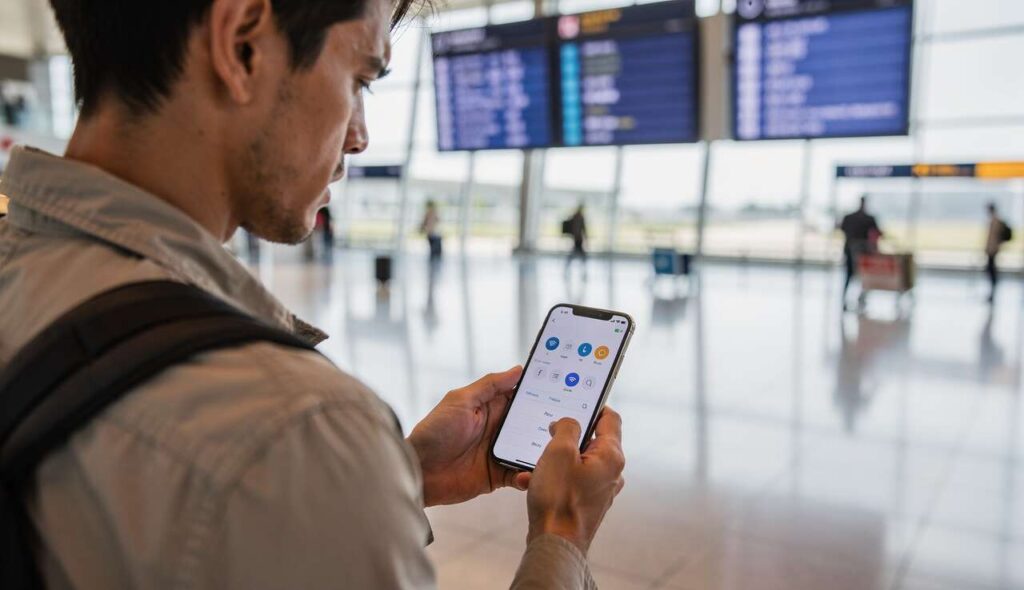
Travelling abroad opens up exciting opportunities to explore new destinations, experience different cultures, and create lasting memories. However, one small oversight with your mobile phone settings could result in unexpectedly large bills that might overshadow your entire trip. Data roaming charges have caught countless travellers off guard, transforming what should have been affordable holidays into financially stressful experiences. Before boarding your next international flight, taking a few moments to adjust a crucial phone setting could save you hundreds or even thousands of pounds. Understanding how mobile data works across borders and knowing which setting to disable is essential knowledge for any modern traveller.
Understanding data roaming
Data roaming refers to your mobile phone’s ability to connect to internet services through foreign networks when you travel outside your home country. When you leave your domestic network’s coverage area, your device automatically searches for available networks in your destination country. Your phone connects to partner networks that have agreements with your home provider, allowing you to continue using mobile data services seamlessly.
How roaming networks function
Mobile networks operate through complex international agreements between telecommunications companies. When your phone connects to a foreign network, that network provides the service whilst your home provider tracks the usage. The foreign network then charges your home provider, who passes these costs onto you, typically with substantial markups. This arrangement explains why roaming charges can be significantly higher than your standard domestic rates.
The process happens automatically and invisibly in the background. Your phone constantly seeks the strongest available signal, switching between networks as needed. Without proper settings adjustments, you might not even realise your device is consuming expensive roaming data until the bill arrives weeks later.
Types of roaming services
Roaming encompasses several mobile services beyond just internet data:
- Data roaming for internet browsing, app usage, and email synchronisation
- Voice calls made and received whilst abroad
- Text messages sent internationally
- Multimedia messages containing photos or videos
- Background data used by apps updating automatically
Each service type carries different charges, but data roaming typically accumulates costs most rapidly due to the volume of information transmitted during everyday smartphone usage. Beyond these technical aspects, the financial implications of leaving roaming enabled deserve careful consideration.
The dangers of hidden costs abroad
The financial risks associated with data roaming can be severe and often come as unwelcome surprises. Many travellers have returned home to discover bills running into hundreds or thousands of pounds for what seemed like modest phone usage during their trips.
Real-world cost examples
Consider these typical scenarios that demonstrate how quickly charges accumulate:
| Activity | Data usage | Typical roaming cost |
|---|---|---|
| Streaming one hour of video | 1-3 GB | £50-£150 |
| Uploading 50 holiday photos | 100-200 MB | £15-£30 |
| Using maps for navigation | 50-100 MB per hour | £7-£15 per hour |
| Social media browsing | 100 MB per hour | £15-£20 per hour |
Background app activity presents an additional hidden danger. Many applications continue updating, synchronising, and downloading data even when you’re not actively using your phone. Email clients fetch new messages, social media apps refresh feeds, and system updates download automatically, all consuming expensive roaming data without your knowledge.
Vulnerable traveller groups
Certain travellers face heightened risks of accumulating excessive charges:
- Business travellers who need constant email access and may not monitor usage carefully
- Families with children who use devices for entertainment during travel
- Elderly travellers unfamiliar with smartphone settings and data consumption
- First-time international travellers unaware of roaming implications
Consumer protection regulations vary significantly between countries and providers, meaning the safety nets preventing catastrophic bills differ depending on your network and destination. Understanding how to prevent these charges through simple settings adjustments becomes crucial for protecting your finances.
How to turn off roaming on your phone
Disabling data roaming requires just a few simple steps, though the exact process varies slightly depending on your device’s operating system. Taking this precaution before departure ensures you won’t accidentally incur charges.
Disabling roaming on iPhone
For Apple iPhone users, follow these straightforward steps:
- Open the Settings app on your home screen
- Tap Mobile Data or Cellular depending on your iOS version
- Select Mobile Data Options or Cellular Data Options
- Toggle Data Roaming to the off position
- Verify the switch appears grey rather than green
You can also enable Aeroplane Mode for complete disconnection from all networks, then manually re-enable Wi-Fi to access internet through wireless networks only.
Disabling roaming on Android devices
Android users should follow these steps, though menu names may vary slightly by manufacturer:
- Open Settings from your app drawer
- Select Network & Internet or Connections
- Tap Mobile Network or Mobile Data
- Find Data Roaming and toggle it off
- Confirm any warning messages that appear
Some Android devices offer additional controls allowing you to disable roaming for specific apps whilst keeping it enabled for others, providing more granular control over your data usage abroad.
Additional precautionary measures
Beyond simply disabling roaming, consider these supplementary protective actions:
- Contact your provider before travelling to understand their specific roaming charges
- Set up usage alerts or spending caps if your network offers them
- Disable automatic app updates in your device’s app store settings
- Turn off background app refresh for non-essential applications
- Download offline maps, entertainment, and other content before departure
These precautions work together to create multiple layers of protection against unexpected charges. The advantages of taking these steps extend beyond merely avoiding bills.
The benefits of turning off roaming
Disabling data roaming delivers numerous advantages that enhance your travel experience beyond the obvious financial savings. Understanding these benefits helps reinforce why this simple setting change should be standard practice for international travellers.
Financial protection and peace of mind
The most immediate benefit remains protecting yourself from bill shock. By eliminating the possibility of roaming charges, you can travel with confidence knowing your mobile usage won’t result in unexpected costs. This financial certainty allows you to budget accurately for your trip and avoid the stress of monitoring data consumption constantly.
Many travellers report feeling liberated rather than restricted by disconnecting from constant mobile data. Without the anxiety of accumulating charges, you can focus on enjoying your destination rather than worrying about every app notification or email check.
Enhanced battery performance
Disabling roaming and mobile data significantly extends your phone’s battery life. When searching for and maintaining connections to foreign networks, your device consumes substantial power. With roaming disabled, your phone stops this constant network searching, preserving battery charge for when you genuinely need it, such as taking photos, using downloaded maps, or making emergency calls.
Reduced digital distractions
Disconnecting from constant internet access encourages more meaningful engagement with your travel destination. Without the temptation to check social media, respond to work emails, or browse the web continuously, you become more present in your surroundings. Many travellers discover this digital detox aspect unexpectedly enhances their holiday experience, allowing them to connect more authentically with companions and local culture.
However, staying completely disconnected may not suit everyone’s needs or preferences, which raises the question of finding middle-ground solutions.
Choosing the right travel plan
If you require mobile data whilst abroad, several alternatives exist that provide connectivity without the excessive costs of standard roaming charges. Evaluating these options before departure helps you select the most appropriate solution for your specific needs and destination.
International roaming packages
Most major mobile networks offer special international packages or bolt-ons that provide more reasonable rates than standard roaming charges. These typically include:
- Daily passes offering unlimited or high-volume data for a fixed daily fee
- Weekly or monthly bundles suitable for extended trips
- Regional packages covering multiple countries within a geographical area
- Pay-as-you-go roaming with capped rates preventing excessive charges
Comparing these options against your anticipated usage patterns helps identify the most cost-effective choice. Contact your provider several days before departure to understand available packages and activation procedures.
Local SIM cards
Purchasing a local SIM card in your destination country often provides the most economical solution for extended stays. This approach offers several advantages:
| Advantage | Description |
|---|---|
| Cost savings | Local rates typically far cheaper than international roaming |
| Domestic calling | Make local calls without international charges |
| Generous data allowances | Often includes substantial data packages |
| Network quality | Access to optimal local network coverage |
Before choosing this option, ensure your phone is unlocked and compatible with networks in your destination country. Some travellers carry a second inexpensive phone specifically for local SIM cards, keeping their primary number active for important calls.
eSIM technology
Newer smartphones support eSIM technology, allowing you to activate digital SIM cards without physical cards. eSIM services designed for travellers offer flexible data packages across multiple countries, activated instantly through apps. This convenient solution eliminates the need to locate SIM card vendors upon arrival and allows easy switching between providers. While these options provide connectivity when needed, alternative methods exist for staying connected without mobile data at all.
Connected alternatives while travelling
Even with data roaming disabled, numerous methods allow you to access internet services and stay connected during your travels. These alternatives provide functionality without incurring roaming charges.
Wi-Fi networks
Wi-Fi connectivity has become ubiquitous in most travel destinations, offering free or low-cost internet access in various locations:
- Hotels, hostels, and other accommodation typically provide complimentary Wi-Fi
- Cafés, restaurants, and bars often offer free access to customers
- Airports, train stations, and public transport increasingly include Wi-Fi
- Tourist information centres and libraries provide public internet access
- Shopping centres and public spaces in major cities offer connectivity
When using public Wi-Fi networks, exercise caution with sensitive activities such as banking or accessing confidential information. Consider using a virtual private network (VPN) to encrypt your connection and protect your data from potential security risks on unsecured networks.
Offline functionality
Modern smartphones offer extensive offline capabilities that reduce dependency on constant internet connectivity:
- Offline maps downloaded before departure provide navigation without data
- Translation apps with offline language packs facilitate communication
- Downloaded entertainment including music, podcasts, and videos
- Saved articles and documents for reading without connection
- Offline note-taking and photo editing applications
Preparing these resources before your trip ensures you maintain functionality throughout your travels regardless of connectivity availability.
Portable Wi-Fi devices
Portable Wi-Fi hotspots, also called pocket Wi-Fi or MiFi devices, provide personal internet access through local networks. These devices create a private Wi-Fi network that multiple devices can connect to simultaneously, making them ideal for families or groups travelling together. Rental services at airports or advance booking online offer convenient access to these devices with predictable daily or weekly rates.
International travel requires careful preparation across many aspects, and managing your mobile connectivity deserves attention alongside booking flights and accommodation. A few minutes spent adjusting your phone settings protects you from potentially significant financial consequences whilst still allowing numerous options for staying connected when needed. Whether you choose complete disconnection, alternative connectivity methods, or special roaming packages, taking control of this setting ensures your focus remains on enjoying your destination rather than worrying about your phone bill. The simple act of disabling data roaming before departure represents a small investment of time that delivers substantial peace of mind throughout your journey.