



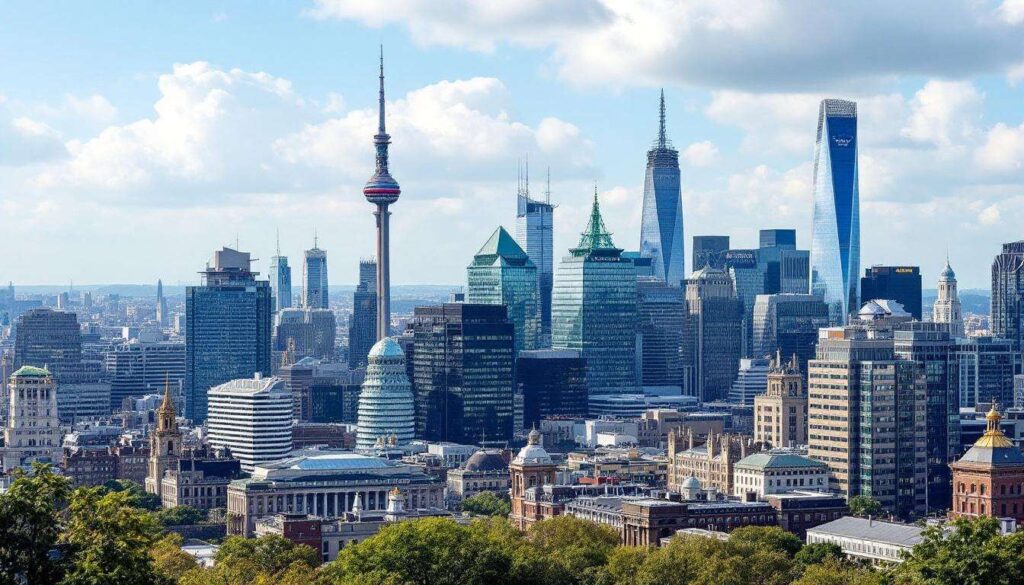
The British skyline has undergone a remarkable transformation over recent decades, with towering structures reshaping the architectural identity of major urban centres. Skyscrapers, once predominantly associated with North American cities, have become increasingly prevalent across the United Kingdom, reflecting evolving demands for commercial space, residential accommodation, and urban regeneration. From the capital’s iconic glass towers to emerging developments in regional cities, vertical construction has become a defining feature of contemporary British urbanism. This shift represents not merely an aesthetic change but a fundamental reimagining of how cities accommodate growing populations and economic activity within limited geographical footprints.
London: Capital of British Skyscrapers
The Dominance of Tower Hamlets and the City
London’s position as the undisputed leader in British skyscraper construction is reflected in impressive statistics from across its boroughs. Tower Hamlets stands at the forefront with 30 skyscrapers, establishing this East London borough as the epicentre of vertical development. The City of London follows with 21 structures, whilst Southwark contributes 9 buildings to the capital’s towering skyline. This concentration demonstrates how specific areas have embraced high-rise construction to meet demands for both commercial and residential space.
Iconic Structures Defining the Skyline
Among London’s vertical landmarks, The Shard remains the most recognisable symbol of the city’s architectural ambition. Soaring over 300 metres into the sky since its completion in 2013, this glass pyramid has redefined what is possible in British construction. The building’s prominence extends beyond mere height, serving as a mixed-use development that combines office space, restaurants, a hotel, and residential apartments within a single structure.
Looking towards the future, One Undershaft represents the next generation of London’s skyscrapers. Scheduled to open in 2029, this development is expected to match The Shard’s impressive height, adding another striking silhouette to the capital’s evolving skyline. The project exemplifies how London continues to push boundaries whilst respecting regulatory constraints.
Regulatory Framework and Aviation Considerations
The development of London’s skyscrapers operates within strict parameters established by the Civil Aviation Authority. These regulations ensure that tall buildings do not interfere with low-altitude flight paths, creating an invisible ceiling that shapes the city’s vertical growth. This balance between architectural ambition and aviation safety has influenced the distribution and design of skyscrapers across the capital, concentrating development in areas where height restrictions are less stringent.
The capital’s dominance in skyscraper construction has established benchmarks that other British cities now seek to emulate, creating a ripple effect of vertical development across the nation.
Manchester: a New Era of Towering Constructions
Surpassing North American Rivals
Manchester has emerged as Britain’s second city for skyscraper development, achieving a remarkable distinction that places it ahead of most North American urban centres. According to assessments, Manchester possesses more skyscrapers than any North American city except Toronto, a statistic that underscores the northern powerhouse’s commitment to vertical growth. This achievement reflects decades of urban regeneration and investment in high-density residential and commercial projects.
The Deansgate Development Corridor
The Deansgate area has become synonymous with Manchester’s skyscraper boom, hosting several landmark developments that have transformed the district’s character. Notable among these is the 40-storey Viadux, a residential tower that exemplifies the city’s approach to high-rise living. These developments address pressing housing demands whilst offering amenities that rival luxury hotels:
- Concierge services providing round-the-clock assistance
- State-of-the-art fitness facilities and swimming pools
- Communal spaces designed for social interaction
- Premium finishes and smart home technology
- Rooftop terraces offering panoramic city views
This five-star lifestyle approach has attracted professionals and investors seeking urban convenience combined with luxury amenities, driving demand for additional high-rise projects throughout the city centre.
Whilst London and Manchester dominate the conversation, other cities are quietly building their own vertical futures.
Birmingham: Towards a Growing Verticality
Emerging Ambitions in the Midlands
Birmingham has positioned itself as a city embracing vertical development, though comprehensive statistics remain elusive. The city’s transformation reflects broader economic regeneration efforts, with skyscrapers serving as visible markers of investment and confidence in the region’s future. Development clusters have emerged around key transport hubs and commercial districts, creating pockets of high-rise construction that gradually reshape the city’s profile.
Balancing Heritage with Modernity
The challenge facing Birmingham involves integrating contemporary skyscrapers within a cityscape rich in Victorian and industrial heritage. Planners must navigate concerns about overshadowing historic buildings whilst accommodating demands for modern commercial and residential space. This balancing act has resulted in careful placement of tall structures, often concentrating them in designated zones where their impact on heritage assets remains minimal.
Scotland’s largest city presents its own unique approach to vertical urbanism.
Glasgow: a Transforming Skyline
Scottish Verticality
Glasgow’s engagement with skyscraper construction reflects both economic opportunity and urban necessity. The city has witnessed gradual vertical growth, particularly in areas undergoing regeneration. Whilst not matching the scale of London or Manchester, Glasgow’s developments signal confidence in the city’s economic trajectory and its ability to attract investment in high-density projects.
Architectural Identity and Planning Considerations
The Scottish planning framework introduces distinct considerations for skyscraper development, emphasising environmental sustainability and community impact. Glasgow’s approach prioritises developments that contribute positively to the urban fabric whilst respecting the city’s distinctive architectural character. This philosophy has resulted in selective approval of tall buildings, with each project assessed for its contribution to the broader cityscape.
Understanding how these cities compare requires examining specific metrics and development trajectories.
Comparison of Major Urban Projects in the UK
Statistical Overview
| City | Notable Feature | Key Development Area |
|---|---|---|
| London | 30 skyscrapers in Tower Hamlets | City of London, Canary Wharf |
| Manchester | More skyscrapers than most North American cities | Deansgate corridor |
| Birmingham | Growing vertical presence | City centre regeneration zones |
| Glasgow | Selective high-rise development | Clydeside regeneration areas |
Investment Patterns and Future Projections
The distribution of skyscraper projects across British cities reveals distinct investment patterns. London continues to attract international capital for prestigious commercial towers, whilst Manchester appeals to residential developers targeting young professionals. Birmingham and Glasgow pursue more measured approaches, balancing vertical development with broader urban regeneration strategies.
These developments carry profound implications for how British cities function and appear.
Impact of Skyscrapers on the British Urban Landscape
Density and Urban Efficiency
Skyscrapers fundamentally alter urban density calculations, allowing cities to accommodate more residents and businesses within constrained geographical areas. This vertical solution addresses housing shortages and provides efficient use of valuable urban land. The concentration of people in tall buildings supports public transport viability and reduces urban sprawl, contributing to more sustainable city models.
Economic and Social Transformations
The proliferation of skyscrapers generates multifaceted impacts on urban communities. Economic benefits include construction employment, increased property values, and enhanced city profiles that attract further investment. However, concerns persist regarding affordability, community disruption, and the creation of exclusive residential enclaves disconnected from surrounding neighbourhoods. The debate continues about whether skyscrapers genuinely serve diverse populations or primarily benefit affluent residents and commercial interests.
British cities have embraced vertical construction as a response to contemporary urban challenges, with London and Manchester leading a transformation that extends to Birmingham, Glasgow, and beyond. The capital’s concentration of over 60 skyscrapers across key boroughs establishes it as the nation’s vertical leader, whilst Manchester’s achievement in surpassing most North American cities demonstrates regional ambition. As projects like One Undershaft approach completion and new developments emerge in cities throughout the UK, the skyline continues its evolution. This vertical growth reflects broader trends towards urban densification, changing residential preferences, and the ongoing reimagining of British cities for future generations. The skyscraper phenomenon represents more than architectural fashion; it embodies fundamental shifts in how urban spaces accommodate economic activity, population growth, and the pursuit of modern living standards within historic urban frameworks.